RISEUP: PUSHING BOUNDARIES, OVERCOMING CHALLENGES IN ADVANCING INJURED SPINAL REGENERATION
Could microsecond electric pulses be used to regenerate the nervous system? Claudia Consales has pondered this question after years of studying the effects of electromagnetic fields on the nervous system. What began as an investigation into potential risks evolved into something far greater – a vision of harnessing their power for healing.
Initially studying low-frequency electromagnetic fields, Claudia, a molecular and cellular biologist at ENEA’s Casaccia Research Centre in Rome, followed her curiosity to explore the effects of ultra-short electric pulses, largely used in biology and medicine for their ability to induce pores formation on cell membranes (electroporation), on calcium movement within cells – an essential process for neural function. Collaborating with a woman engineer colleague, she began to wonder: Could these pulses stimulate stem cells to become neurons without causing harm?Could this be a pathway to repairing spinal cord injuries?
“I have always been fascinated by biological mechanisms,” Claudia explains. “Our cells operate with incredible precision, responding to external stimuli in ways we are only beginning to understand. If we could tap into these responses, we might unlock groundbreaking therapies.”
Claudia’s research particularly on whether this calcium movement induced by microsecond electric pulses could drive neuronal stem cell differentiation. Calcium, indeed, plays a crucial role in transmitting information, signaling external changes, and triggering cellular responses. In the nervous system, it is vital for transforming neural progenitors into neurons and for synaptic plasticity, which strengthens neuronal connections even in adulthood.
She and her team had already observed that even at intensities slightly below the threshold for electroporation, calcium flow still occurred. Their ultimate goal was to use these pulses on neuronal stem cells to guide their transformation into neurons – controlling a biological phenomenon through a precise stimulation protocol. This approach could aid tissue regeneration, particularly in spinal cord injuries.
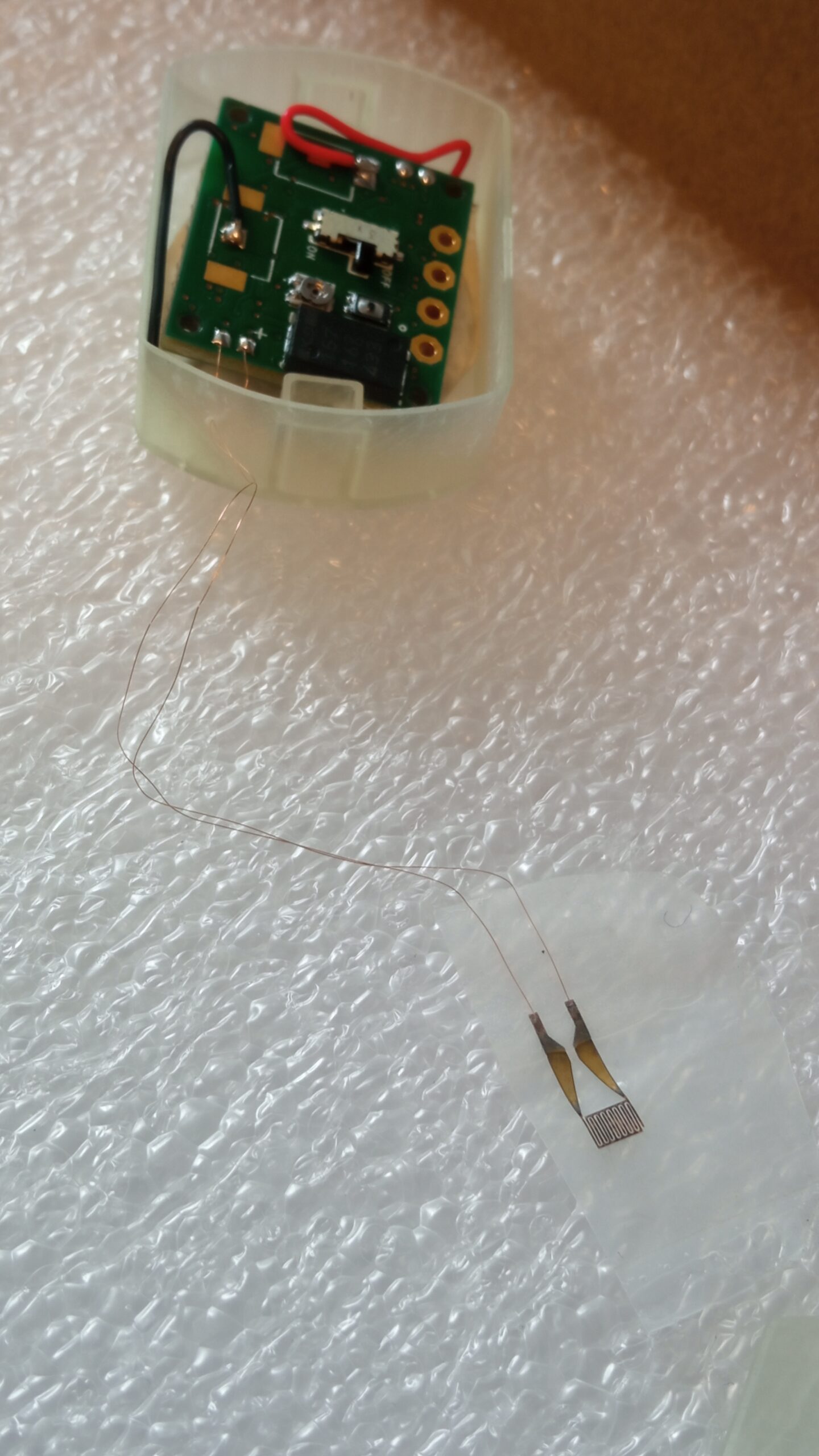
The RISEUP technology, featuring an ultra-flexible and miniaturized electrode connected to a battery, enables wireless stimulation
At the time, Claudia and her colleague were in France, where the maximum expert of these ultra-short pulses and inventor of electrochemotherapy was based. After extensive discussions and brainstorming, they formulated an idea that would eventually become the RISEUP project. When they presented it to the lead researcher, they were met with great enthusiasm. However, enthusiasm alone was not enough – they needed a team, a plan, and, crucially, funding.
Securing a FET Open H2020 grant proved to be a formidable challenge. “We applied three times before we were finally successful,” Claudia recalls. “Firstly, our scientific idea was always strong, but we underestimated the importance of demonstrating impact and implementation.”
Each rejection was a learning experience. They refined their approach, strengthened their consortium, and ultimately secured the grant during the COVID-19 lockdown – a testament to perseverance and adaptability. “It took a while to realise what had happened,” Claudia recalls, “but when I did, I was overwhelmed with emotion.”
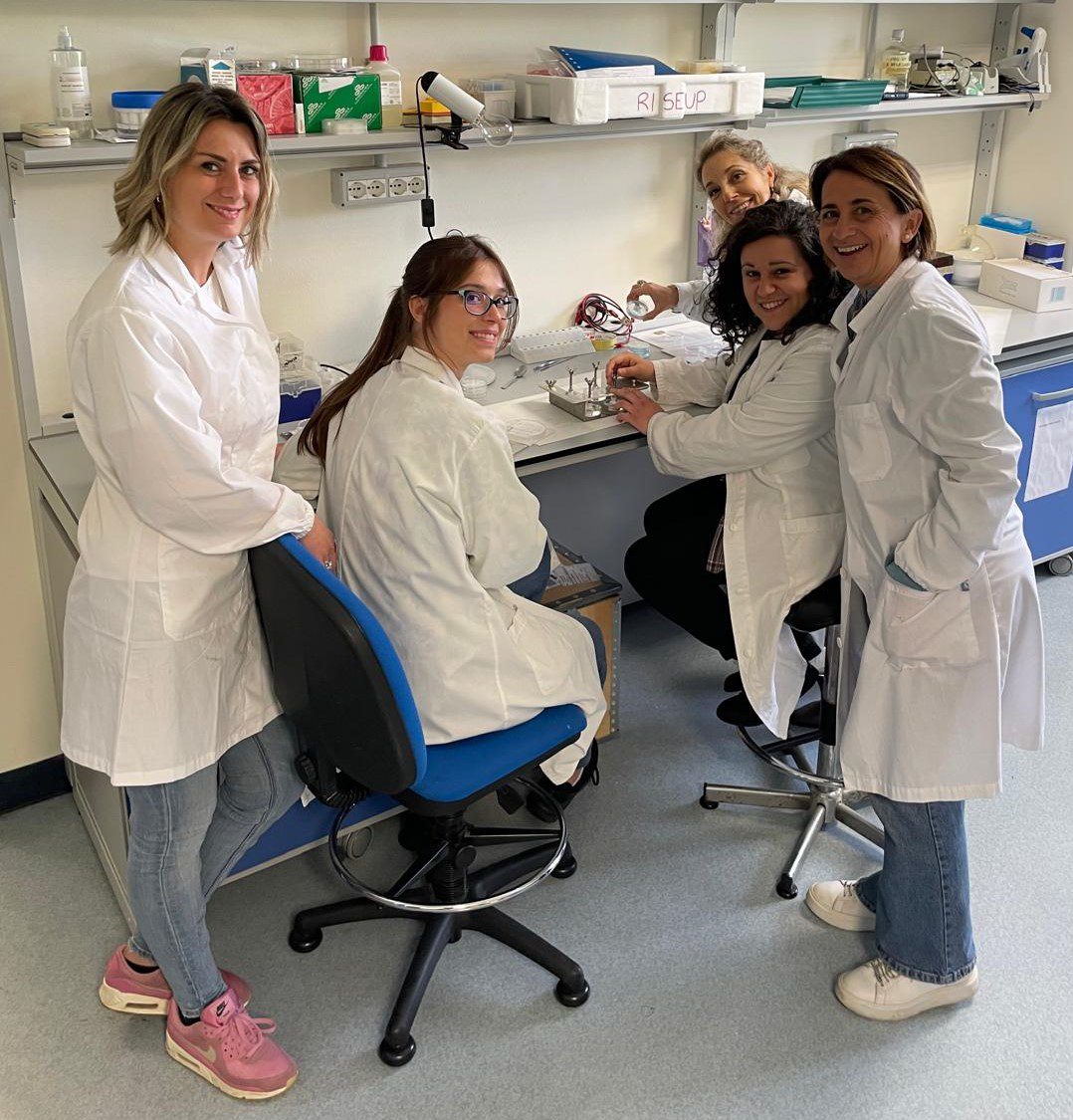
The RISEUP consortium brought together a multidisciplinary team from Italy, Spain, and France. The Italian partners, including Sapienza University’s bio-electromagnetics team – an entirely female team – contributed engineering expertise, while CNR provided deep knowledge of neural research; the Centro Investigación Príncipe Felipe brought their 20-year experience in spinal cord injuries, the Polytechnic University of Valencia brought their expertise in biomaterials and the company RISE Technology brought their deep experience in microelectronics. Claudia found herself in the role of coordinator, a position she had never held before.
“I wasn’t sure if I could lead a project of this scale,” she admits. “But I knew every detail of it. I knew what we were trying to achieve, and I had an incredible team. That gave me confidence.”
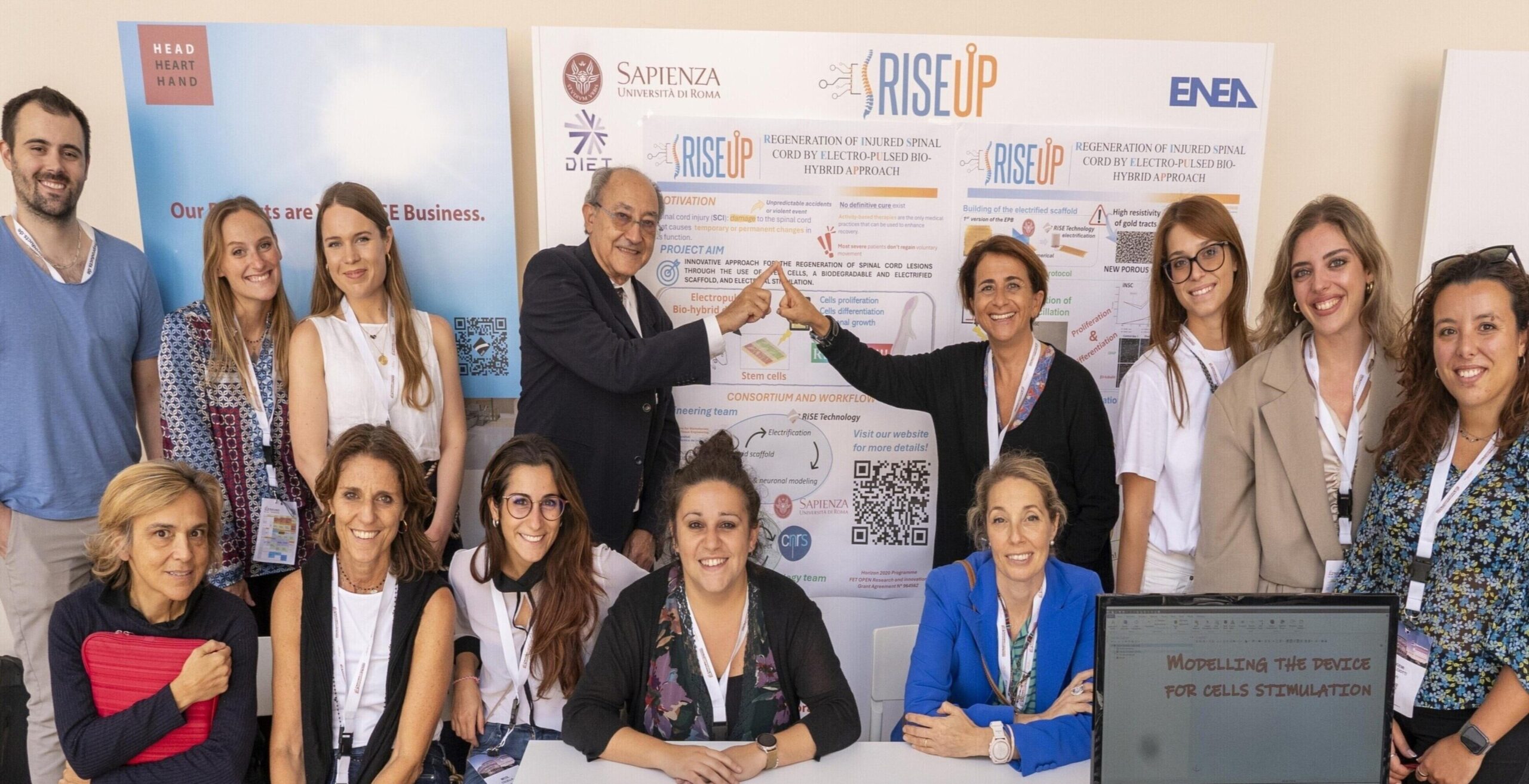
The ENEA, Sapienza University, and CNRS teams at World Congress of Electroporation
Coordinating RISEUP was a crash course in leadership, logistics, and resilience. The administrative side of European projects was a steep learning curve. Beyond paperwork, there were deeply human challenges. Yet these moments reinforced a truth Claudia had long understood: research is not just about science – it’s about people. Mentorship, emotional support, and collaboration are as vital as technical expertise. Through trial and error, she found her way. “My biggest lesson was realising that it’s okay not to know everything,” she reflects. “The key is knowing whom to ask for help.”
RISEUP is more than an ambitious scientific endeavour; it has a profound human impact. Claudia was unprepared for the wave of emails from spinal cord injury patients and their families after the project’s announcement. “They were desperate for hope. At first, I didn’t know how to respond.” One patient, in particular, left a lasting impression. A tetraplegic journalist with a brilliant mind, he provided invaluable perspective and unfortunately one year ago he died from his condition. Claudia carries his memory as a source of inspiration. “I was lucky to have known him. He reminded me why this work matters.”
One of the most remarkable aspects of RISEUP is its strong female representation, particularly in a Deep-Tech field traditionally dominated by men. “The Sapienza engineering team is entirely composed of women. Our PhD students and postdocs – many of them young women – bring so much passion and dedication.”
“This project has two wonderful aspects: its strong female representation and its focus on young researchers.” Many of them are early-career women whose enthusiasm and dedication are remarkable. Despite the challenges of academic job precarity, they remain highly motivated. The project’s multidisciplinary nature is also enriching. Engineers engage in discussions about spinal cord injuries and biology, while biologists explore the physical aspects of electromagnetic fields.
Creating opportunities for young researchers has been a priority for Claudia. She ensures they gain visibility, lists them as co-authors, and encourages them to take on leadership roles. Having faced discrimination, job insecurity, and the struggle of balancing research with personal life, she is committed to supporting the next generation.
RISEUP is more than a scientific project – it is a testament to perseverance, collaboration, and the profound impact of research on real life. Its long-term vision extends beyond spinal cord injuries; the technology could revolutionise treatments across multiple medical fields.
For Claudia, this journey has been transformative. “I never expected to learn so much – not just about science, but about leadership, resilience, and the power of human connection.”
Join us to explore the innovation within the EIC Communities project. Learn how projects can gain unprecedented visibility and connect with a network of peers, policymakers, and potential partners.
We use cookies to ensure that we give you the best experience on our website. If you continue to use this site we will assume that you are happy with it.