

B-CRATOS: THE WIRELESS TECHNOLOGY REDEFINING BRAIN-MACHINE INTERFACES
When Robin Augustine stumbled across a video of neuroscientist John Donoghue, he didn’t realise it would change his professional path. In the video, Donoghue described a critical limitation of brain-machine interfaces: wires. Wires to transfer brain signals, wires to enable communication with machines. Wires that tethered patients and bottlenecked innovation.
Robin, a biomedical engineer exploring an unconventional idea, saw a solution where others only saw a challenge. “I thought, we can fix this. I had a technology that could replace those wires,” Robin recalls. His idea was as daring as it was untested—harnessing microwaves to transmit data through the body’s fat layer.
“When I reached out to John and told him about it, he asked, ‘Is that even possible?’ I told him, yes, and that’s when we got to work,” Robin explains.
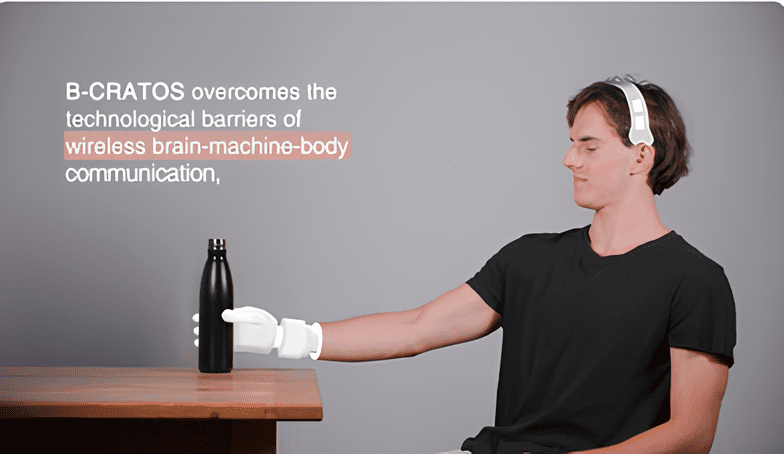
This chance encounter sparked B-CRATOS, an ambitious European project that aims to restore mobility and sensation for individuals with spinal cord injuries or amputations. At its core is a wireless brain-machine interface that not only allows users to control prosthetic limbs but also lets them feel through them.
Traditional brain-machine interfaces experience a significant problem: they require massive amounts of data to flow quickly between the brain and an external device, often relying on wires. Robin’s solution, known as Fat Intrabody Communication (Fat-IBC), takes a different approach. By transmitting microwave signals through the subdermal fat layer, B-Cratos creates a seamless, high-bandwidth communication pathway within the body.
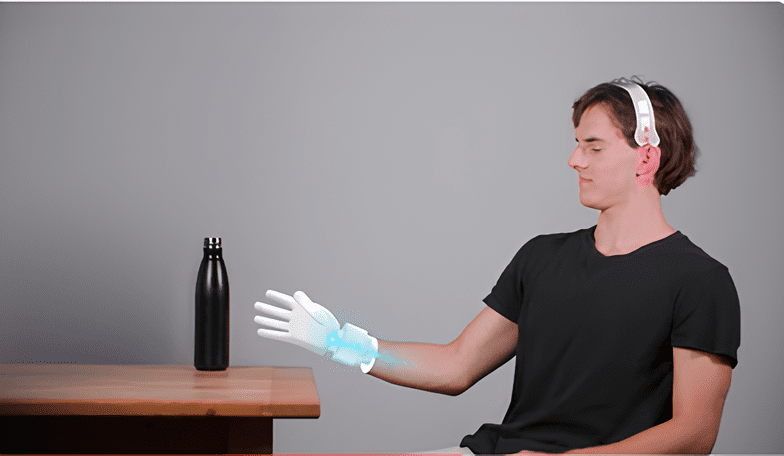
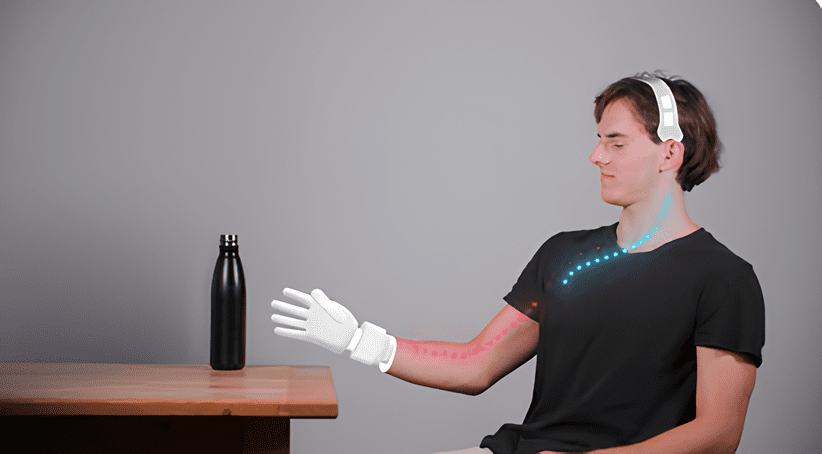
“It’s counterintuitive,” Robin admits. “Fat behaves differently from other materials, but with the right physics and technology, we can propagate signals efficiently through it.”
What makes Fat-IBC unique is its adaptability. “We’re not reinventing telecommunication systems,” Robin explains. “We’re repurposing existing protocols and technologies to work within the body, which makes it scalable and energy-efficient.”
But B-Cratos is more than just a communication system. It brings together multiple groundbreaking technologies:
- Fat-IBC developed by Uppsala University to facilitate brain to extremity 2 way communication.
- Neural implants developed by Blackrock Microsystems to capture brain signals.
- Artificial intelligence from Italy’s Links Foundation to decode those signals into motor commands.
- The advanced robotic Mia Hand, developed by Prensilia srl, spin-off the BioRobotics Institute of Sant’Anna School of Advanced Studies, to restore mobility.
- Electronic skin, developed by Uppsala University, which replicates the sense of touch and sends signals back to the brain.
Turning this bold vision into reality required collaboration across disciplines, a task Robin describes as one of the project’s greatest challenges. “Integrating neuroscience, AI, and robotics isn’t like building a standard computer,” he explains. “We’re developing something entirely new, and that means creating the systems and interfaces from scratch.”
“Integrating neuroscience, AI, and robotics isn’t like building a standard computer, we’re developing something entirely new, and that means creating the systems and interfaces from scratch.”
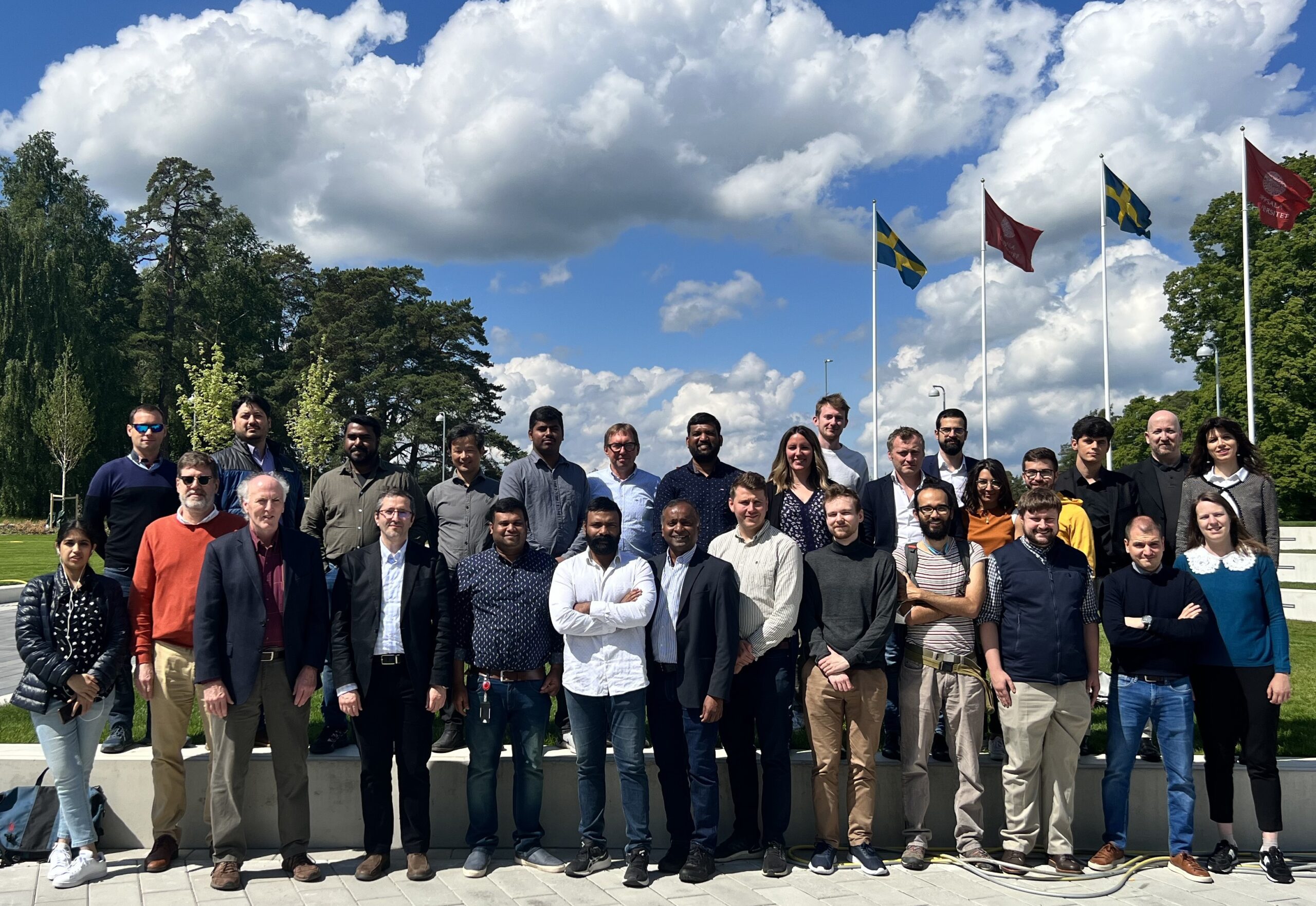
Robin credits the success of B-CRATOS to the carefully selected consortium of top-tier researchers. “These are experts at the cutting edge of their fields. When you work with people who are inherently motivated, the project takes on a life of its own.”
The team’s first major test came with trials on macaque monkeys, conducted at the German Primate Center. “If we can demonstrate success in macaques, it’s a strong indicator that the system will work in humans,” Robin notes. The monkeys presented a unique challenge—not only are their cognitive abilities limited, but their fat layers are significantly thinner than those of humans. “Even with these challenges, we’re achieving the speed and accuracy we need,” he says.
The implications of B-CRATOS are profound. In the short term, the team aims to prove that their wireless system works seamlessly as a package—capturing brain signals, transmitting them through the body, and restoring motor function with tactile feedback.
In the long term, Robin envisions far more: “Once we demonstrate this technology, we could think beyond prosthetics. We could restore organ function, bridge damaged spinal cords, or even create an artificial spinal cord.”
It’s an ambitious vision, but Robin remains grounded. “This is just the beginning,” he says.
For Robin, B-CRATOS is not just about science—it’s a personal mission. “The project keeps me constantly engaged. It’s exciting, it’s challenging, and I’m on my toes every day,” he shares. Balancing this work with family life hasn’t always been easy. “I’m married with two kids, and sometimes you have to make sacrifices. But the potential of what we’re doing makes every challenge worth it.”
“The project keeps me constantly engaged. It’s exciting, it’s challenging, and I’m on my toes every day. We’re not just creating technology; we’re changing lives.”
Already, Robin and his team are looking ahead to B-CRATOS 2.0. “We’re not stopping here,” he says. “This is about more than technology. It’s about giving people back their independence, their mobility, and their connection to the world.”
B-CRATOS stands as a testament to innovation, collaboration, and the drive to push boundaries. As Robin puts it, “We’re not just creating technology; we’re changing lives.”
Cover photo credits: Bhautik Patel – Unsplash
