The THERMOBAT project is pioneering molten metal-based thermal batteries for scalable, modular energy storage and on-demand power and heat delivery. Is this the bold, innovative answer to renewable energy’s storage problem?
Many scientific discoveries have been made by chance. Percy Spencer discovered the useful heat of microwaves when he walked past an experimental magnetron, a type of radar tube, that melted a candy bar in his pocket – just two years later, the first microwave ovens were cooking meals.
So, when Alejandro Datas of the Technical University of Madrid (UPM) stared at the data from his 2011 PhD project on solar thermophotovoltaics and saw a light-to-electricity efficiency of just 1% from his devices, his dreams of bringing cheap renewables to the masses looked shattered. But he noticed the novel blend of materials on his solar thermal converter was unusually warm – and they could keep that heat for a long time, much longer than other photovoltaics, releasing it slowly and stably as useful latent heat energy. Was this unique effect a second chance at success?
“I ended my PhD with that ongoing feeling of not having had an impact. But thinking about the next challenge for the solar industry – energy storage – I thought to myself, ‘wait a minute, I can do that!’”
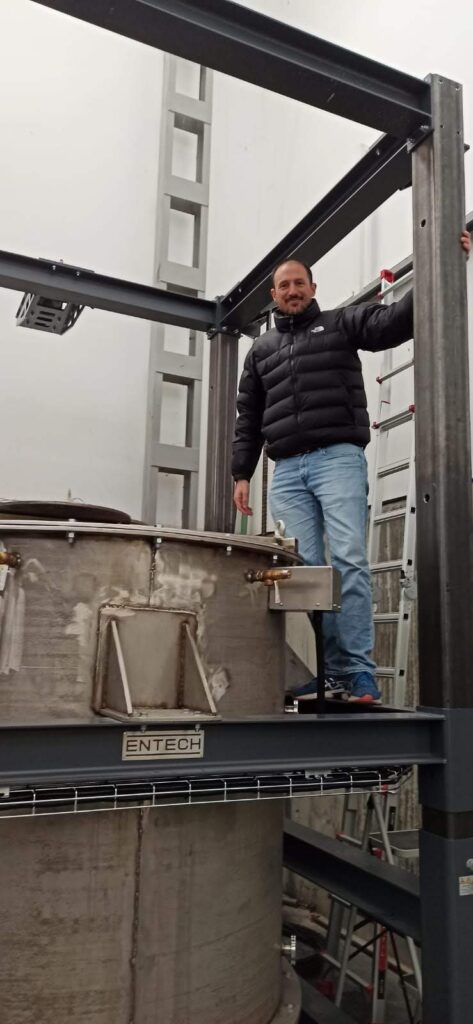
Alejandro Datas climbing the thermal battery that the project is developing.
Fast forward 15 years, and Alejandro is leading the Thermobat project, funded through the European Innovation Council (EIC) Transition programme, which supports deep-tech solutions aligned with EU priorities like renewable energy uptake. “The funding is everything,” Alejandro says. “Without these powerful funding mechanisms, you can’t do this type of frontier experimental work.”
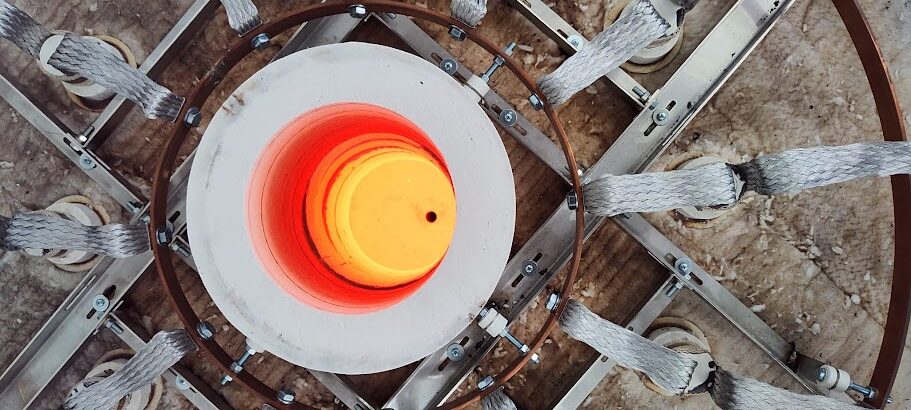
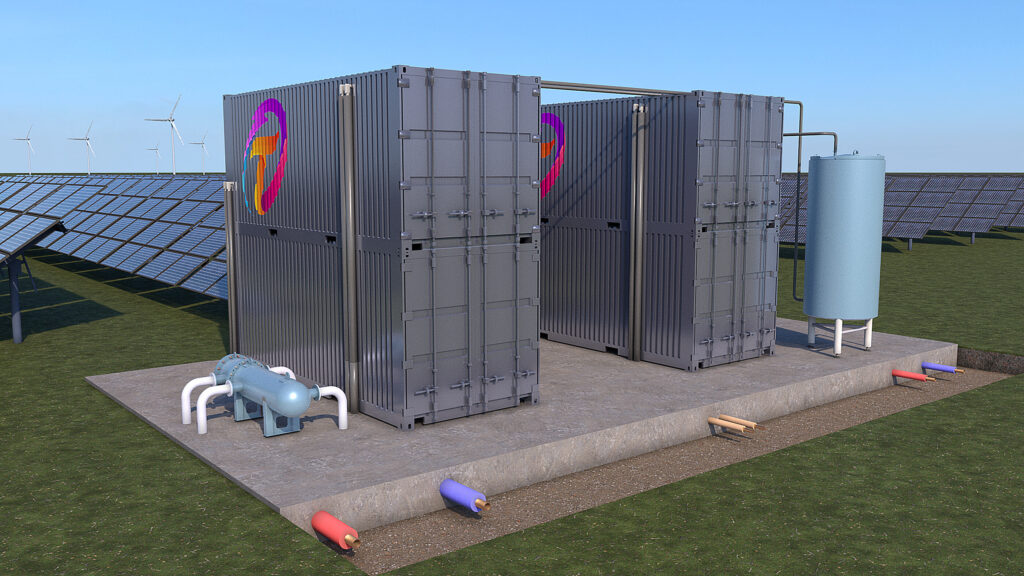
The project focuses on thermal energy storage from renewables by melting metals – a novel and potentially game-changing solution for energy storage, rather than generating it in the first place. The project harnesses surplus electricity from solar power or wind farms to melt obscure combinations of metal alloys in a large modern-day cauldron, which stores energy (very well) in the form of latent heat. This energy can later be converted back into electricity using thermophotovoltaic (TPV) cells or delivered directly as heat.
Since large amounts of fossil fuels are currently used to generate heat for homes, offices, and factories, delivering heat directly from a thermal battery enables the electrification of heating. This can lead to significant CO₂ emission reductions, as around 50% of final energy consumption in the EU is related to heat use.
Yet another efficiency bonus comes from the fact that electricity production from renewables often surpasses demand – think headlines of powered down wind farms wasting enough energy for 800,000 homes – and can’t be stored in large enough amounts or transported economically. Europe has around 85 gigawatts of energy storage systems, but needs to double it to reach the EU’s legally binding 2030 target for 42.5% of total energy production from renewables. Deriving heat from thermal batteries to help meet that target is such a good idea, it’s a wonder no one thought of it before.
Except someone did. Alejandro recalled a paper from his PhD literature review by NASA physics and materials scientist Donald Chubb, who proposed much the same idea back in the 1996 paper Solar Thermophotovoltaic (STPV) System With Thermal Energy Storage. “I read a paper from the 1990s where he was already proposing this by melting silicon, because if you change silicon from solid to liquid, you need a huge amount of energy to perform this reaction,” says Alejandro. “It means that all this energy will be stored in the liquid phase, and you can retrieve it when it solidifies, so it’s perfect for energy storage.”
Alejandro linked up with Chubb who, nearing his retirement, was that a young researcher was keen to collaborate and take on the thermal battery torch. A paper developed with Chubb while in a postdoc position at the Tokyo Institute of Technology, and helped Alejandro secure funding on the EU Amadeus project in 2017 that investigated next-generation materials and solid-state devices for ultra-high temperature energy storage and conversion.
The Amadeus project was key, and when it ended in 2019, two partners, UPM and the Norwegian University of Science and Technology (NTNU), graduated to the present-day Thermobat project.
ThermoContainer
The grant support catalyses continuing work to find exactly the best soup of metals for battery efficiency and practicality. For instance, you can’t use pure silicon because it freezes and expands like water and smashes the containment vessels. “So we changed to ferrosilicon, an alloy of iron and silicon and other elements like boron that store anomalous amounts of useful latent heat,” says Alejandro. “And now we are working with a eutectic material – this means that everything melts at the same temperature, around 1200 °C at present.”
The Thermobat project has spun out a commercial entity – Thermophoton – to secure future private investment funding for the next commercial phase. Some of the materials used in the thermophotovoltaic converter, like indium, are rather expensive, so work continues to make the process as cost-effective as it is efficient. “Thermophotovoltaics is the only solid-state technology that can convert heat into electricity with efficiencies over 40%,” says Alejandro,
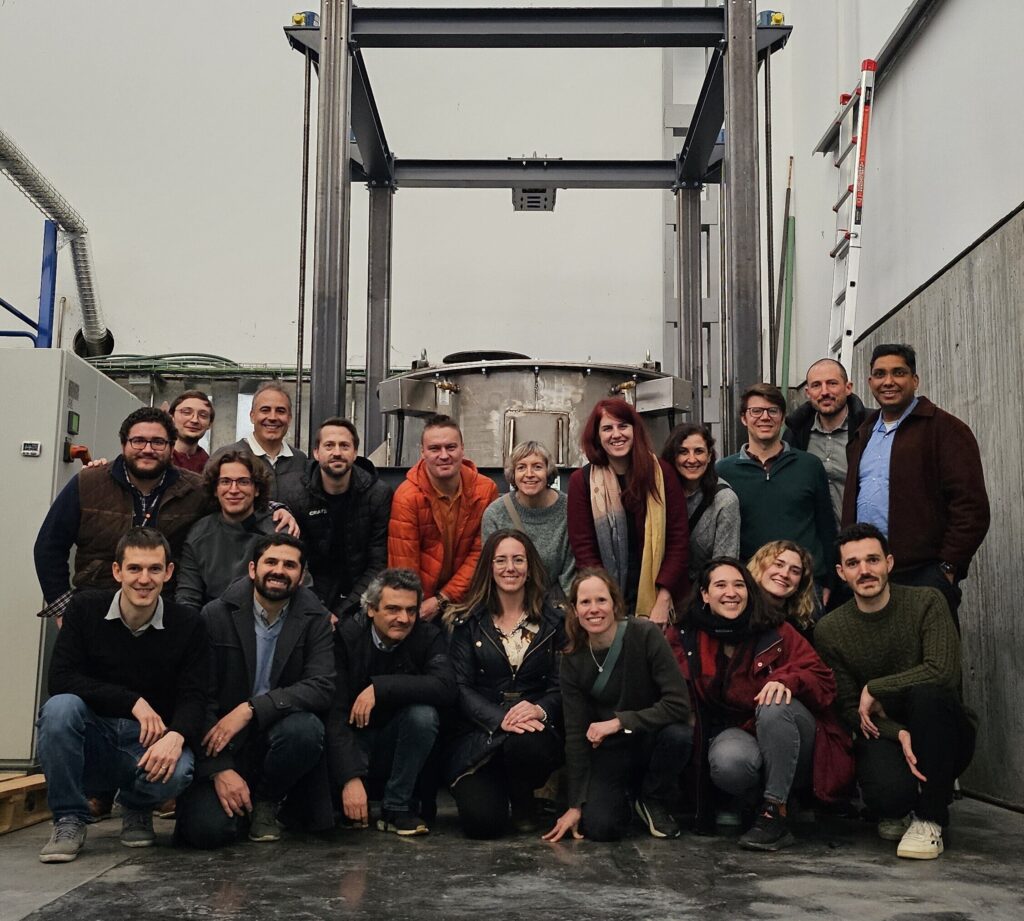
The core lab at the Solar Energy Institute at UPM now includes around 17, with cross-sector collaborators across Europe. But he acknowledges that there are more challenges still to push through.
The THERMOBAT Team
“Being surrounded by people is incredibly motivating, and there’s always some kind of positive feedback that keeps you going.”
And academics the world over must keep innovating across the energy sector. The renewable share in worldwide power generation is rapidly growing; 80% of the growth in global electricity generation was provided by renewable sources and nuclear power in 2024, so balancing supply and demand is ever more pressing. The innovative thermophotovoltaic approach can deliver both heat and electricity on demand, helping to solve the current storage problem and enabling a cleaner, more sustainable future.
“It’s increasingly clear that the thermal batteries market is going to be huge, something I’ve come to believe strongly over the years,”
says Alejandro. “There are more and more companies working in thermal energy storage, not only Thermophoton, but many others. It’s a very exciting field, and I think many of them have a real chance to succeed.”
Join us to explore the innovation within the EIC Communities project. Learn how projects can gain unprecedented visibility and connect with a network of peers, policymakers, and potential partners.
We use cookies to ensure that we give you the best experience on our website. If you continue to use this site we will assume that you are happy with it.