

THE HEART OF THE PROBLEM: HOW AI IS CHANGING CARDIOLOGY
Machine learning algorithms can spot some cancer with 98% accuracy, so why not employ the same trick on heart disease? Meet Ligence, the European team who made automated software for cardiac ultrasound analysis.
A cardiologist and a software engineer walk into a bar… it reads like the start of a joke, but the end result was anything but – the two friends, Arnas Karužas and Karolis Šablauskas, in front of a drink then after the session got to work and formed the start-up Ligence, secured EU funding, and developed an artificial intelligence (AI)-powered program to take the time, strain and pain out of echocardiography’s intensive image processing regiment. It saves time and improves diagnostic accuracy for key tell-tale signs of heart disease while simultaneously benefiting practitioners and enhancing the chances of better patient outcomes.
For once, an idea happened. “Arnas, who is a cardiac clinician and performs echocardiographies every day, knows how mundane the task can be and would rather be talking to his patients,” recalls healthcare economist Barbora Butkutė, Ligence’s Head of Marketing, about the day it all started. “And he’s with his best friend Karolis, a software engineer, who replies that ‘hey, this is a fun task to try and automate.’”
After initial research, the pair saw that the prototype program was working well and founded Ligence in 2019 in Vilnius, Lithuania. Funding was secured in 2022 through a European Innovation Council (EIC) €3M Accelerator grant, a funding initiative designed to support innovative small and medium-sized enterprises (SMEs) engaged in deep tech and breakthrough innovations.
And technical step-change advance in cardiology is worth supporting. Heart disease is the primary cause of fatality in Europe: in 2022, ischaemic heart disease was the leading cause of death among men and women aged 65 and over in the EU. Circulatory diseases accounted for almost one-third (32.7%) of all deaths in the EU in the same year. In 2020, cardiovascular disease (CVD) was responsible for 1.8 million deaths (out of around 5.3 million deaths) in Europe and the UK.
“Heart disease is the number one killer in the world,” says Butkutė, adding that echocardiography is the number one test for the presence of heart disease. But it’s still largely a manual process, subject to human error, with a highly qualified practitioner taking around 45 minutes to complete. “A doctor who has studied for more than ten years is pressing buttons, more than 100 clicks, to do a single test. And so, our software automated it,” she says. The sonographers benefit too, with 80% of sonographers suffering from musculoskeletal disorders; anything that reduces the burden is a double bonus.
The result is a real-time analysis process, and the clinician can now better focus on talking to the patient and establishing trust, says discussing family medical history or prospective lifestyle changes, while the monotonous image processing takes place in the background.
The heart moves in 3D, mammograms are static 2D – the Lithuanian team is still teaching the machine what healthy looks like compared to unhealthy; add to that the complexities of sex, ages, and ethnicity.
“Heart failure is a common, costly, and potentially fatal condition, and is the leading cause of hospitalization and readmission in older adults,” says Butkutė. “But Ligence AI is very good at picking up heart failure. It often goes undiagnosed until late because the symptoms at first might be quite generic: shortness of breath and fatigue.”
No wonder the EIC was keen to support Ligence with its most powerful funding mechanism when, besides the human cost, the economic impact of CVD across the EU each year is around €281Bn. The EIC Accelerate program is designed to bridge the funding gap in the early stages of technology development, allowing startups to accelerate their growth, stabilise and enhance their market position enough to attract private sector investments.
As well as the Ligence team now has a clutch of investors and backers who are confident the AI-powered technology will get even better, more accurate, and translate into measurable benefits for people across Europe. In November 2024, Ligence secured additional €3 million seed funding led by venture capital firm Simpact Ventures, including a convertible loan from the EIC Fund. With FDA clearance pending in 2025 to enter the lucrative US market, it could be an incredible year for the team.
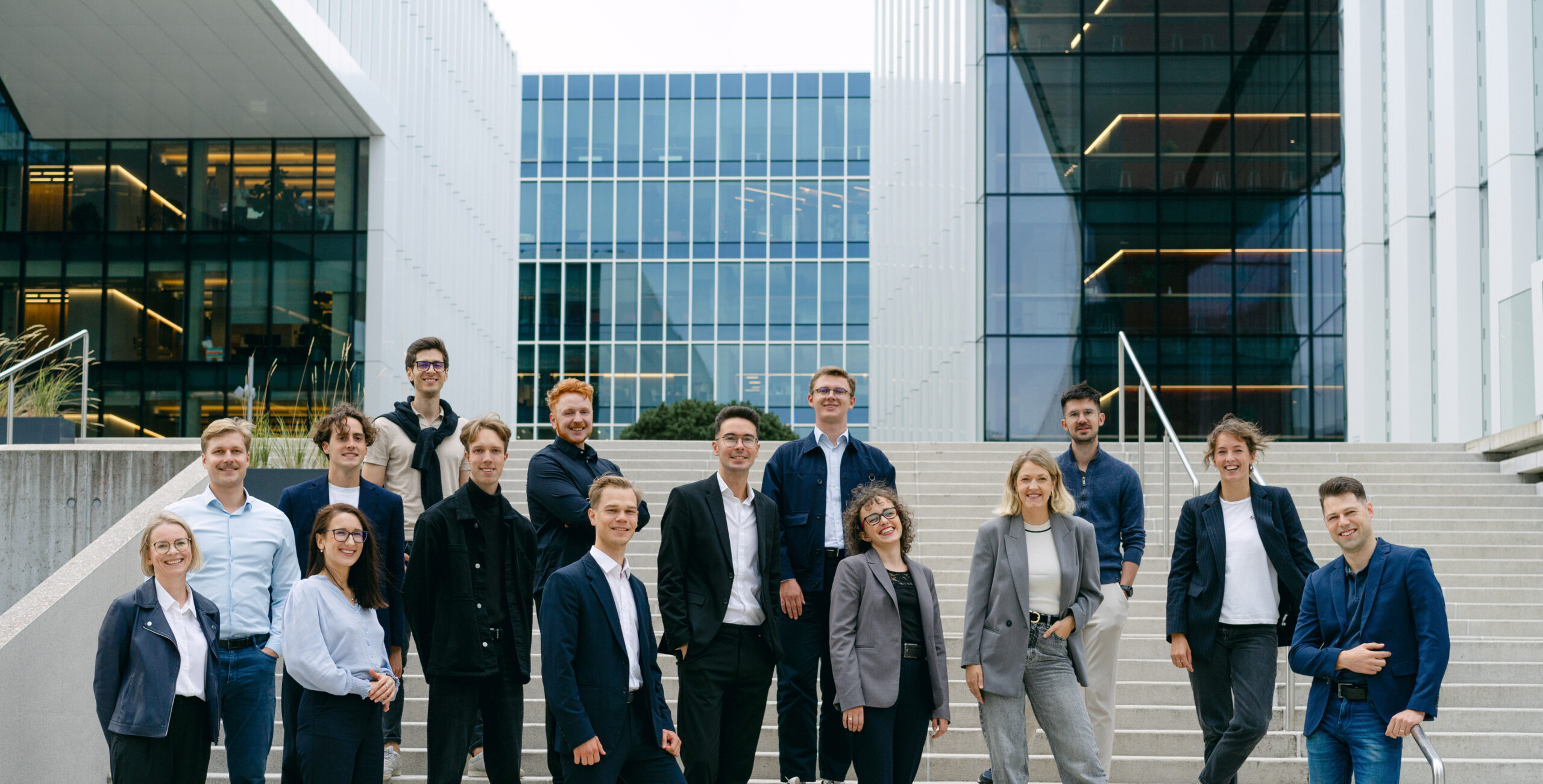
For Butkutė, a health economist, there is a magic about the Ligence team’s use of AI. “It’s always human. There is no AI for the sake of it,” she says. “There is AI because we want doctors to spend more time doing what they were trained to do – to cure patients.”
Speaking to the Ligence team, it’s easy to sense the close-knit community that catalysed the early stages of the project. Lithuania is a country of 2.8 million people out of 450 across the EU. Once you are in the Lithuanian world of clinicians, Butkutė jokes, you pretty much know everyone. “It came together really as a project of friends, who saw that this AI-powered solution for echocardiology was a no brainer. It’s the logical solution to an existing problem.”
And the problem is big. Heart disease mortality is even higher: in 2020, 67% of all deaths recorded in Ukraine were caused by CVD, and more than half of all mortalities in Belarus, as well as in Bulgaria, Moldova, and Romania.
The journey to translating the technology to better patient outcomes is far from over in a fast-moving and increasingly uncertain world. But Butkutė has a unique insight into what makes the team tick. Butkutė says.
“It’s perseverance. The majority of the team are clinicians; they are used to persevering, it’s why they became doctors in the first place. Without perseverance, there is nothing at the end of the day. It’s just in our blood to keep on pushing until we have the right result.”
Photo by Maxim Berg on Unsplash
