
SOLARUP: HOW A HAPPY ACCIDENT SPARKED A NEW PATH FOR SOLAR ENERGY
From failed wires to light-trapping pyramids, a European research consortium that aims to rewrite the rules of photovoltaics by using exotic structures made from zinc, not silicon, to make flexible solar cells from a more abundant element.

When science stumbles, it sometimes falls straight into a useful discovery. That’s what happened in a laboratory in the final year of a PhD, when an attempt to grow delicate nanowires collapsed into failure. Instead of fragile wire-like structures, the experiment produced small zinc phosphide pyramids. It looked like a mistake, but it’s turned out to be a record-breaking leap forward for solar energy production.
“The experiment failed spectacularly. Instead of nanowires, I grew this zinc phosphide as pyramids. And then we realised, wait, this is actually better”,
Recalls Simon Escobar Steinvall, a material scientist based at Lund University, Sweden.
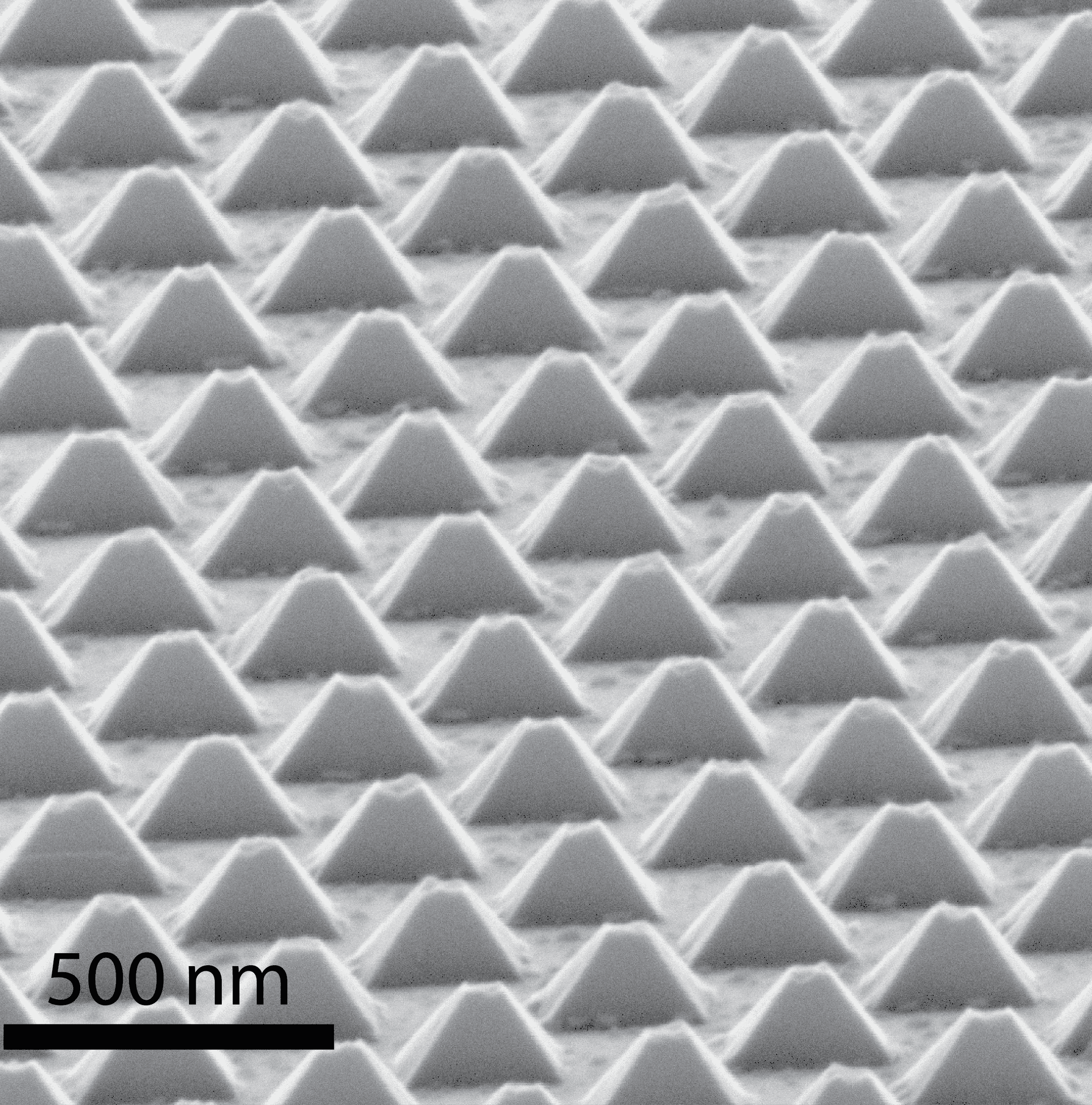
The “happy accident” quickly revealed itself as promising. The pyramidal texture of zinc phosphide mimicked the textured surfaces used in the most efficient silicon solar cells. Such textures scatter light inside the cell, preventing it from escaping and giving electrons more chances to do energy-producing work. “In silicon, engineers etch this pyramidal structure in with chemicals,” explains Simon. “We get it for free, straight out of the fabrication process.”
This serendipitous bonus set the stage for SOLARUP, a seven-partner collaboration spanning universities and research institutes across Europe. What began as a small-scale doctoral experiment now forms the basis of a project funded by the EIC Pathfinder programme, one of the EU’s flagship mechanisms for nurturing high-risk, high-reward research.
Solar cells: silicon vs zinc
But why even try using zinc phosphide when silicon already rules the global solar cell market, worth between $33Bn and $116Bn depending on which market estimate you refer to? The answer lies in its direct band gap: a measure of how efficiently photons and electrons move in the substrate. “The difference with silicon is that zinc phosphide has a direct band gap, so the layer that absorbs the light only has to be one to two micrometres thick,” says Simon. “But silicon needs ultra-pure layers hundreds of micrometres deep to capture enough sunlight.”
This means cells could be much thinner, lighter and even flexible. Applications could include portable power, wearables, or niche environments where silicon panels are simply too heavy or rigid. It also reduces the demands for extreme purity, lowering potential production costs. “Using zinc phosphide definitely opens up options for lightweight, wearable applications that are more or less out of reach for standard silicon technologies,” Simon.
If using zinc phosphide in photovoltaic cells has so many benefits, how come no one has tried it before? In fact, scientists did so in the 1970s because zinc is more abundant and less expensive to extract than silicon, but its record efficiency of around 6% has remained unbroken for decades, partly because older fabrication techniques made the material harder to work with.
The SOLARUP project has broken through that historical ceiling. “45 years ago until today, the record efficiency for a zinc phosphide solar cell was about 6%,” says Simon. “Now we’ve managed to beat this record by a fair bit, reaching 8.5–9%.” But he adds that to be really viable for industry, the new record needs another boost. “The aim is 15%. That’s the level where industry starts to pay serious attention.”
Fabricating the future
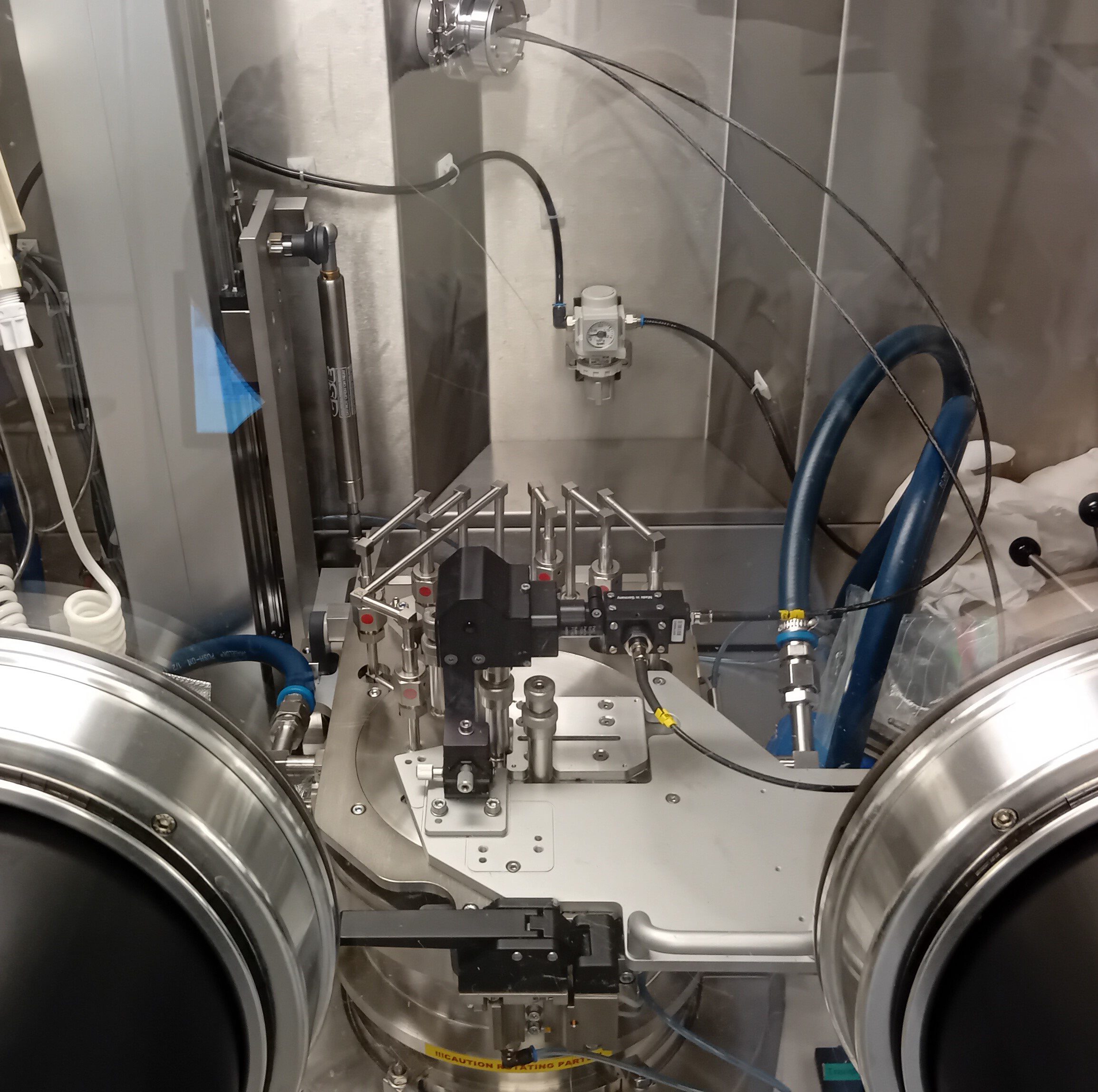
Beyond enhancing the efficiency of the zinc phosphide material, the project has pulled off another coup: scaling up fabrication. Early experiments relied on electron beam lithography, a time-intensive process that carves nanoscale holes one at a time – producing a usable wafer for resting could take days.
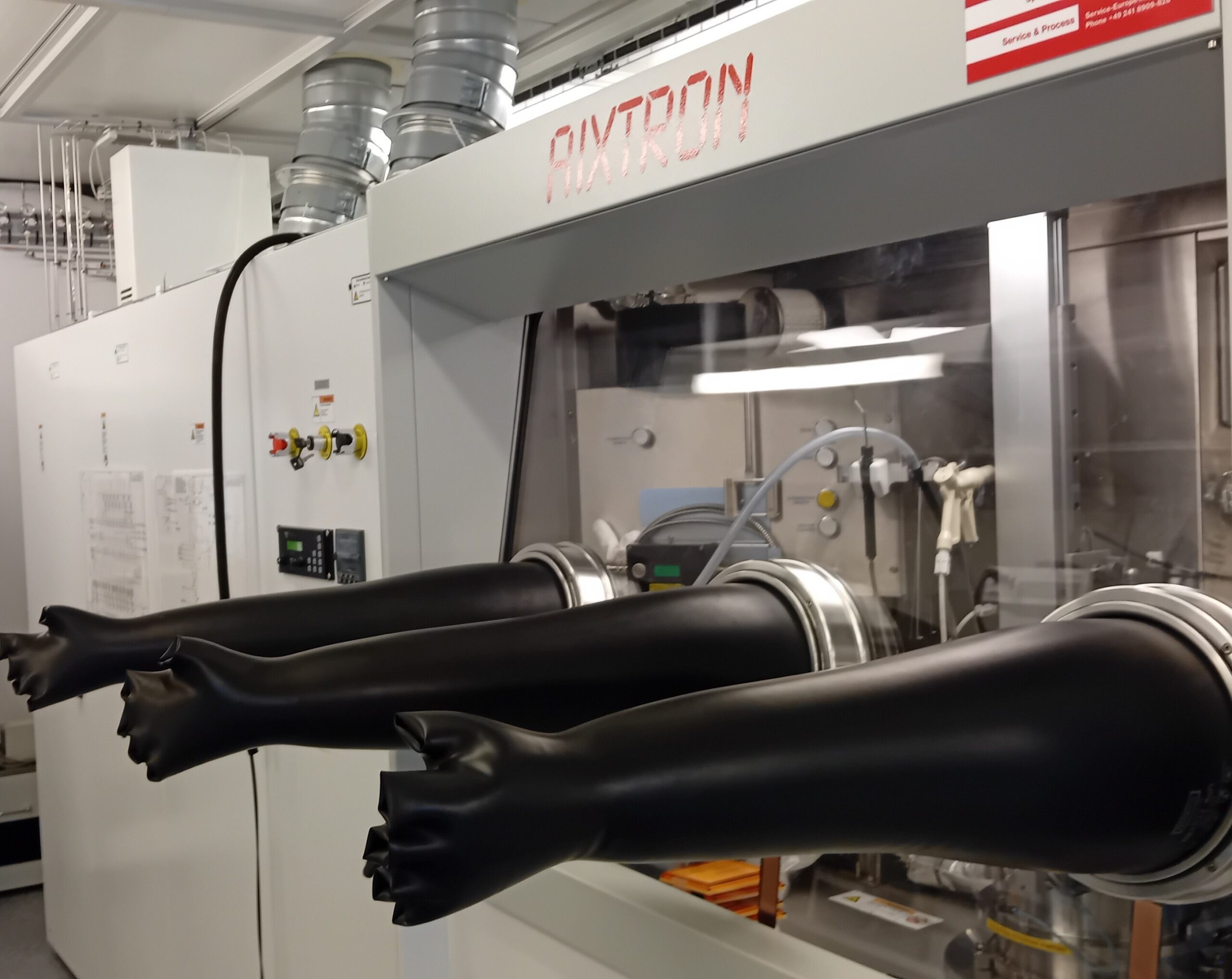
The SOLARUP consortium replaced this with Talbot displacement lithography, an optical interference technique that creates wafer-scale patterns at once. “Instead of taking over 10 hours for two inches, we can do it in a minute or two to produce up to a four-inch wafer,” explains Simon, adding for context that in one day, they can now make enough substrates for six months’ worth of experiments; before, a week of nanofabrication gave just a few days’ worth.
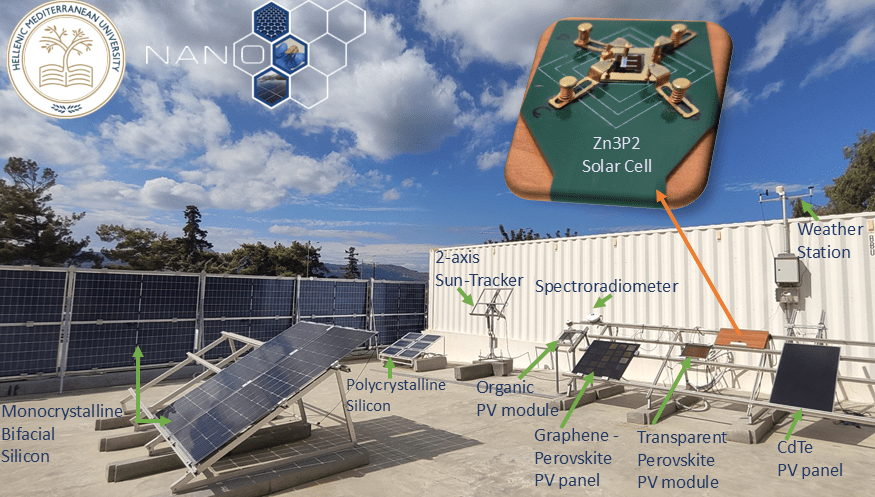
SOLARUP is a truly interdisciplinary pan-European project coordinated by the Catalan Institute of Nanoscience and Nanotechnology (ICN2) in Barcelona, specialists in electron microscopy who analyse defects in the grown material. EPFL in Switzerland fabricates the test devices, while Ruhr University Bochum provides theoretical models of defects at the atomic level. In the Netherlands, research institute Amolf tackles device design challenges, while TNO assesses lifecycle impacts and sustainability. Lund University is where Simon’s team carries out much of the nanopyramid and fabrication work, while the Hellenic Mediterranean University in Crete tests finished devices under real sunlight.
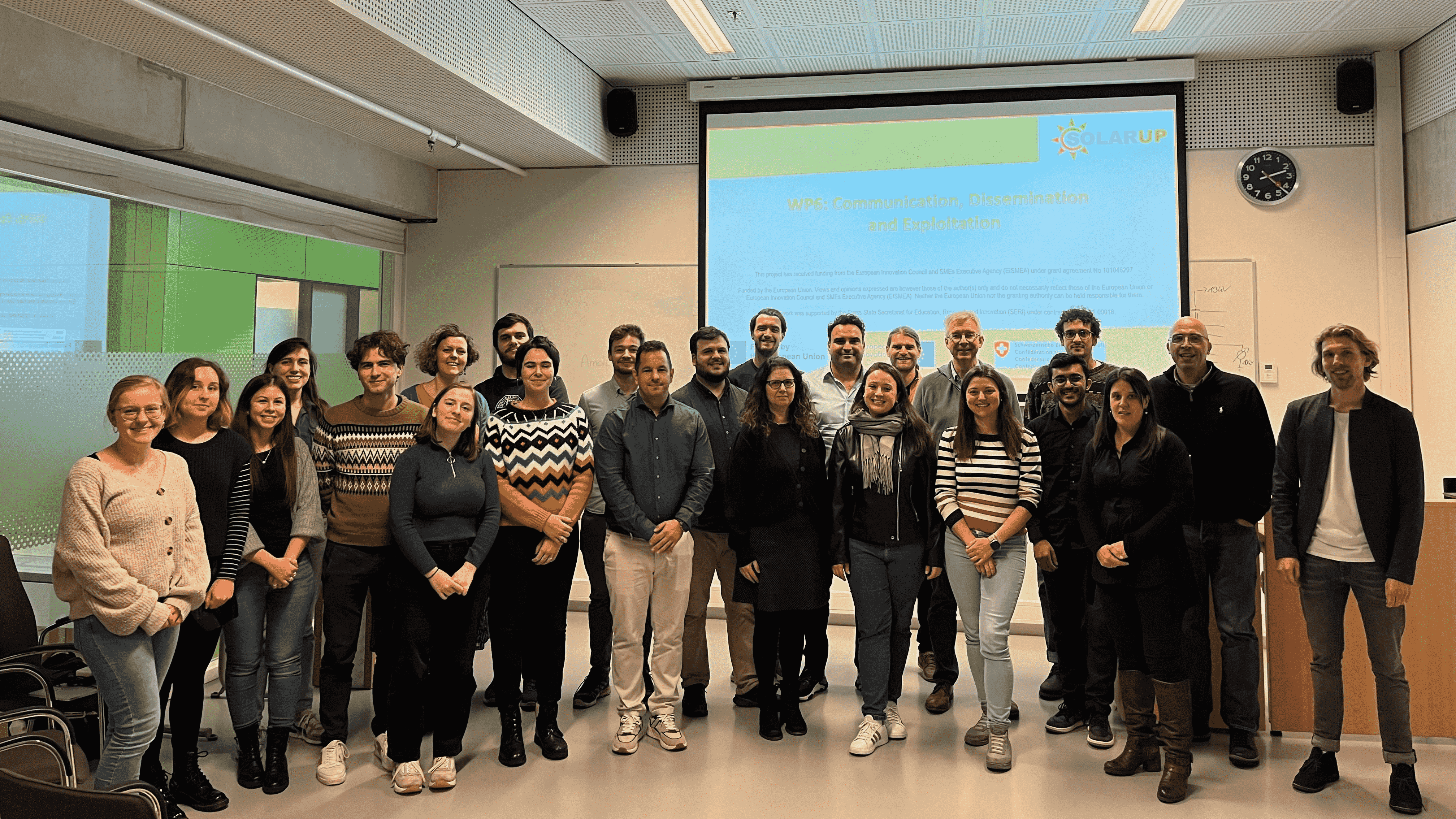
Overall, the project encompasses everything from fundamental physics to real-world performance trials. But Simon is keen to stress the project’s training dimension through the model of an Innovative Training Network (ITN), supporting PhD students across Europe, where early-career researchers gain international experience while feeding fresh ideas into the project. “It’s as much about education as it is about technology,” says Simon.
Pushing the frontiers
It’s all funded by a €3m EIC Pathfinder grant ending September 2026 that embraces early-stage ideas with a higher risk of failure; this type of funding allows consortia like SOLARUP to take risks and probe the edges of what’s possible. It also comes with built-in progression to help bridge successful research towards industrialisation. “The good thing with Pathfinder is that you can really start from low Technology Readiness Levels,” says Simon. “And it comes with follow-ups, the EIC transition afterwards, so we’re already in the process of thinking how to move it to the next step.”
For the researcher who first stumbled upon those zinc phosphide pyramids, the journey has been both professional and personal after the initial failure. “I wasn’t sure if I would go back to this material,” Simon admits. “But now it’s my full-time job. I find it exciting to wake up in the morning and work on something I love doing.”
If SOLARUP can turn laboratory serendipity into scalable, sustainable solar cells, it will break more records and champion again what’s possible when science follows the unexpected. Indeed, the project’s techniques for growing semiconductors with fewer defects, while very good for solar cells, Simon points out, can also have other applications, from quantum computing to terahertz sensors, and who dares imagine what more.
