
RE-CREATING TERRA, ONE CLAY TILE AT A TIME
When RE-CREATE was awarded support under Horizon 2020, it marked a milestone in a journey that had begun years earlier, not in a laboratory or boardroom, but in a young designer’s quiet discomfort with the way things were made.
“I started it with my ten fingers,” says Adital Ela, founder and CEO of CRIATERRA. “It was really a vision of developing building products that are not fired and are fully circular.”
Long before grants and production lines, there was simply curiosity, and a sense that something was wrong. Trained as an industrial designer in the 1990s, Adital recalls how products were taught as objects to be separated from nature. “We treated materials with the most heat, the most chemicals, the most force, just to detach them from the environment so they would last.” Durability was prized, but at a hidden cost.
That unease stayed with her. Determined to explore alternatives, she pursued a master’s degree at the Design Academy Eindhoven, asking a deeper question: how might we design in a way that respects natural cycles rather than breaks them? Her research led her to indigenous material cultures around the world.
The turning point came in India. During fieldwork, she encountered a simple clay cup used for chai. It was shaped from local clay, dried in the sun, and, after use, thrown back onto the ground to return to the earth. “At first I thought, what are these crazy people doing?” she laughs. “Why are they throwing cups on the ground?”
Then came the realisation. Minimal energy. A short, purposeful life. A safe return to nature. “This is an ingenious material cycle,” she says. “We borrow clay, apply the least energy needed to make it functional, and then return it unharmed to the biosphere.” At 25, she remembers thinking, “One day I will build a factory that works on these principles”.
That promise eventually evolved into RE-CREATE, a project aligned with the European Green Deal’s urgent call to transform the building sector. Without action, energy demand in construction could rise by 50% by 2050. The production of conventional building materials is carbon-intensive, resource-hungry and often leaves behind non-biodegradable waste. RE-CREATE proposes something radically different: regenerative construction materials made largely from by-products and recycled resources, produced with minimal energy and emissions, and designed to be recyclable and biodegradable at the end of their life.
Yet the early days were spent working solo in a deeply focused way. For a full year, Adital conducted hands-on experiments herself, testing clay-based formulations and circular processes. “It was really hands-on research that I did on my own,” she says, until gradually an “A-Team” began to form.
A colleague introduced her to a materials scientist, Zvi Cohen, a PhD researcher deeply committed to circular materials. “In the beginning, he thought it was impossible,” she admits. “But he was open to the challenge.” Today, he serves as Chief Material Scientist at CRIATERRA, bringing scientific rigour to what had begun as intuition. Their partnership blended design thinking with material science, a natural chemistry that grounded vision in evidence.
Another key figure, Daphna Wiener, joined after mentoring the company through an accelerator programme and now serves as Chairperson. Her instinctive belief in the technology’s potential helped to strengthen both governance and strategic direction.
What began as one woman’s experiment gradually evolved into a committed, multidisciplinary team. Over time, additional key figures joined the journey, including Leat Applbaum (Board Director), Ziv Maor (Production Manager), Sivan Abramovich (VP Finance), Dudu Dahan (Design and R&D), Sharon Saul (Production Planning and Control) and others.
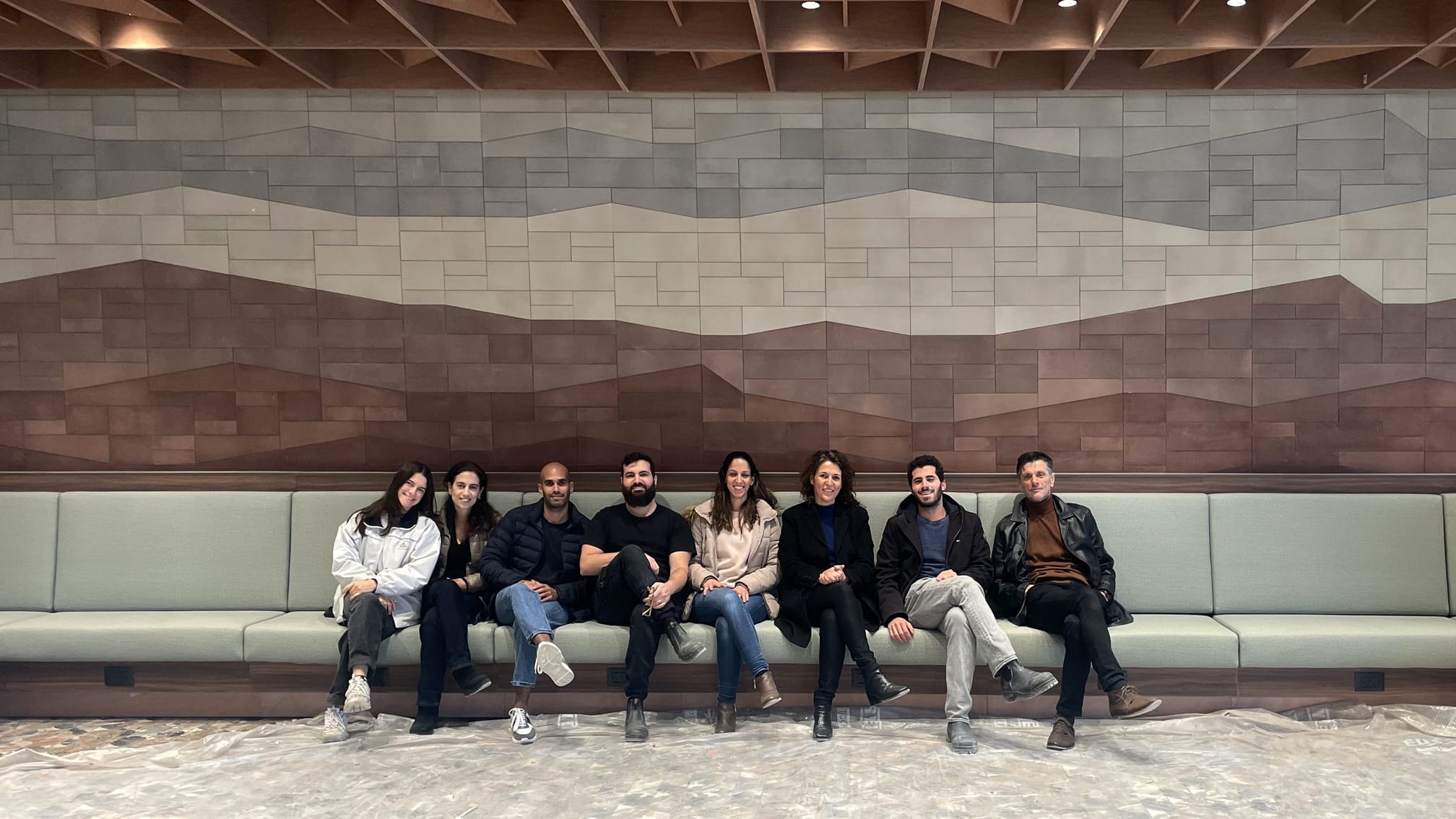
Together, they transformed an idea shaped by hand into a growing industrial and scientific endeavour.
The hurdles, however, kept coming. “There are endless obstacles, five times a day,” Adital says candidly. The greatest challenge lay in the very originality of the idea. CRIATERRA’s technology does not fit existing production lines. To introduce the product meant creating an entire manufacturing ecosystem, from molecule to machinery.
“You can’t attract investment without production and income,” she explains, “but you can’t have production without investment.” It was a constant tension. The breakthrough came through partnership: establishing a dedicated production venture in the Netherlands to manufacture one million square metres of tiles in Romania at scale. By aligning with financial partners, they found a path forward.
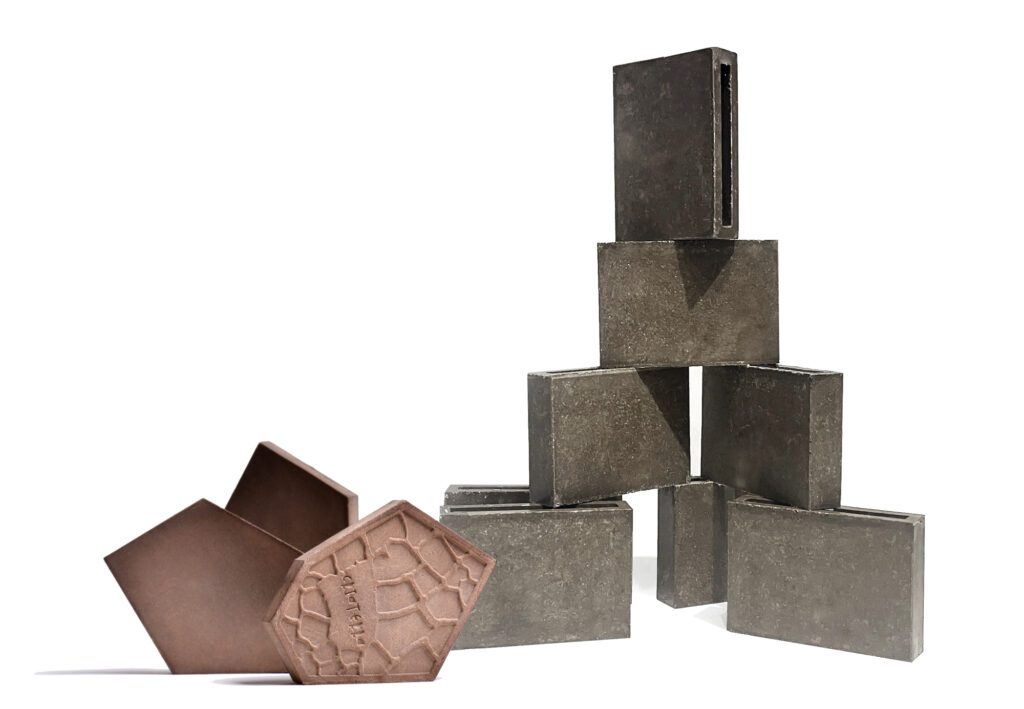
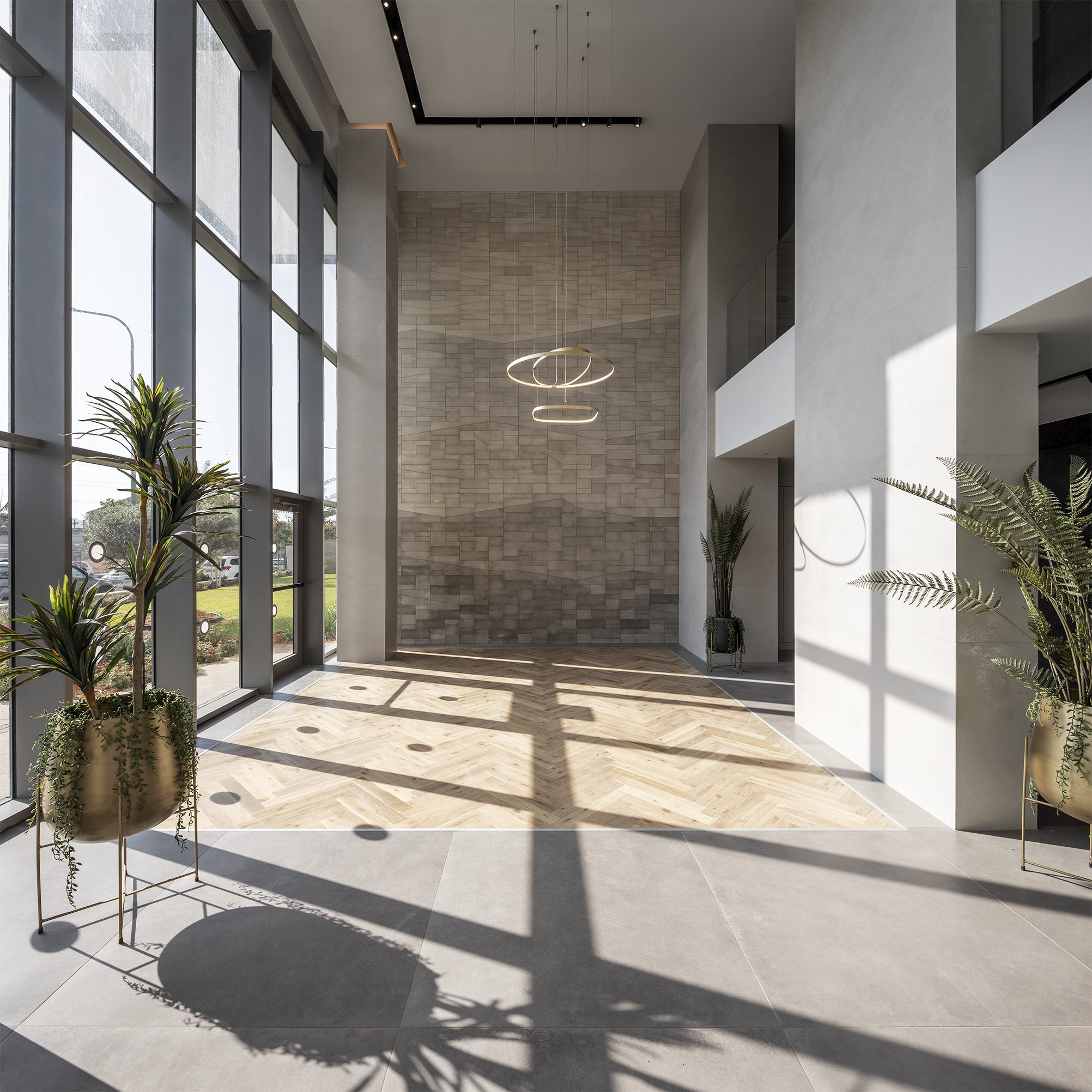
Today, CRIATERRA has developed what it calls a zero-cement bio-geo stone platform, a circular, low-energy material suitable for various precast building products. The first application is wall tiles for dry and wet rooms, with plans for outdoor cladding and masonry blocks. The ambition is bold: at least one production line on each continent, using local resources for local needs. Products manufactured below the boiling point of water. Zero process and combustion emissions. Fully circular, both technologically and biologically.
For Adital, the journey is deeply personal. “It’s a symbiotic relationship,” she reflects. The work brings meaning, connection and satisfaction, but also exhaustion and vulnerability. The commitment has demanded energy, resilience and sacrifice. There have been moments of burnout, moments of doubt.
So how does she continue? “We go back to basics and remind ourselves why we’re doing this,” she says. The motivation cannot be personal ambition alone. It must be rooted in something larger, in proving that construction does not have to rely on firing minerals at extreme temperatures, that materials can respect life and return safely to the earth.
“When I get tired, I give a lecture,” she adds with a smile.
“Sharing the idea reminds me why I chose to dedicate ten years of my life to this. It’s a much bigger story than my personal story. I remind my team of that and the larger community around me, and that gives us a strong renewable energy to continue.”
RE-CREATE is not only about tiles or technology. It is about challenging deeply embedded habits in one of the world’s most resource-intensive industries. It is about showing that research, however difficult, can reshape practice. And above all, it is about perseverance, the quiet determination to follow a conviction, even when the path demands building the system from scratch.
For those considering a similar journey, Adital’s story offers both realism and hope. The road is uncertain, often exhausting and rarely straightforward. But with clarity of purpose and the courage to question convention, change is not only possible, it can be built, quite literally, from the ground up.
Photo credits: Criaterra
Cover by Neven Krcmarek on Unsplash
