

FROM CHILDHOOD MEMORIES TO AN ICONIC IDEA
Pelayo Garcia De Arquer, ICONIC project coordinator, still remembers the summers he spent as a child in La Manga del Mar Menor, a place where the sea sparkled under the sun. Over the years, he started noticing a remarkable change over the lagoon.
Once a clear place, it started to get clouded by algae blooms and its fish populations dwindling, due to the excess fertilisers used in the surrounding agricultural lands – fertilisers that made the region famous, among others, for its tomatoes and oranges but had a devastating effect on the local ecosystem. The build-up of fertilisers in the water that were not absorbed by the soil led to the overgrowth of algae, a sharp decrease in oxygen levels in the water, and the suppression of fish species – a process known as Eutrophication.
“That place holds so many memories for me,” Pelayo recalls. “Seeing it deteriorate year after year made me wonder – could we do something to reverse the damage?” That question planted the seed for what would eventually become ICONIC (Integrated conversion of Nitrate and Carbonate streams), a research project – funded by the European Innovation Council Pathfinder – aimed at restoring polluted water ecosystems while turning harmful compounds into valuable resources.
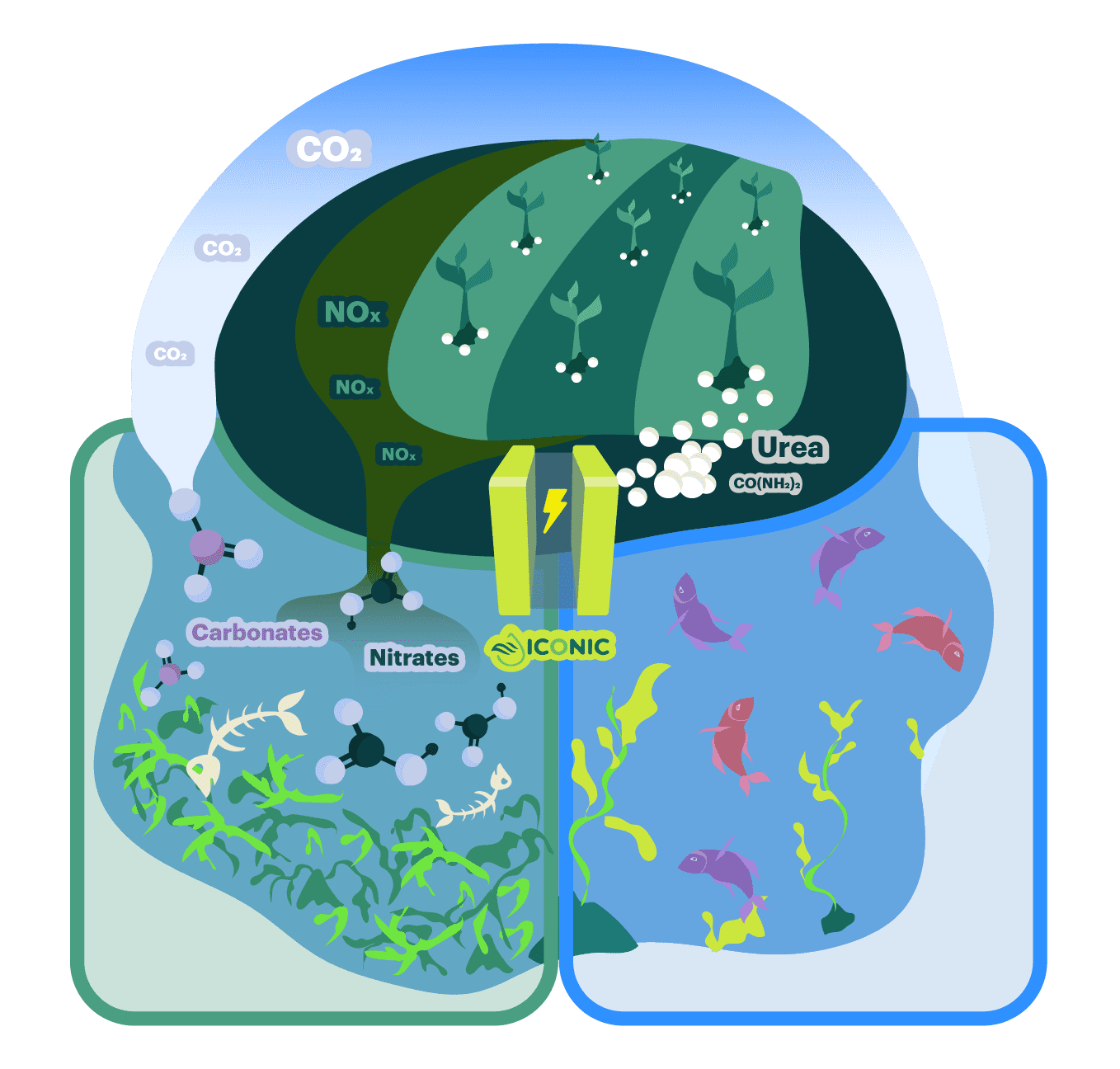
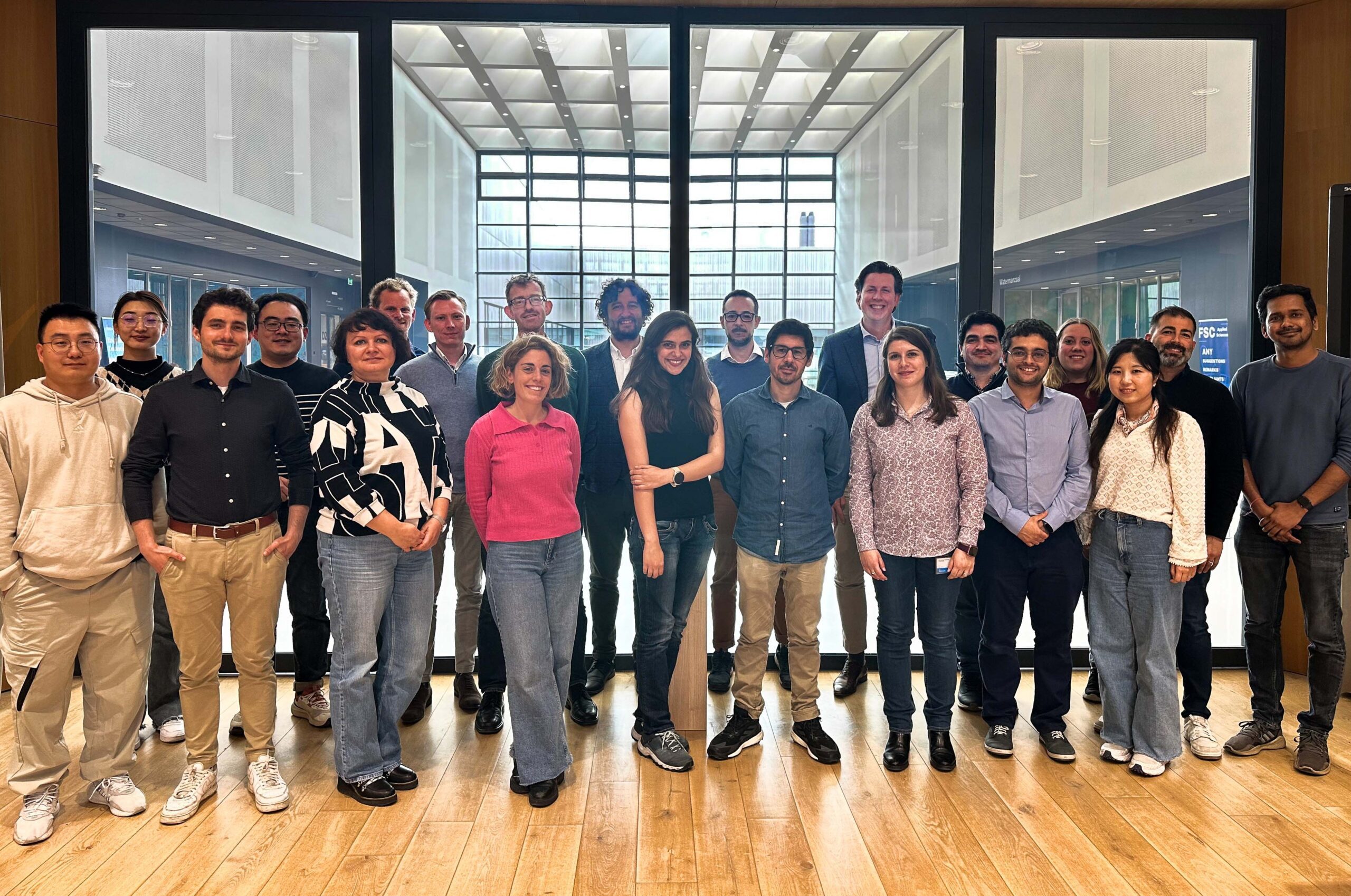
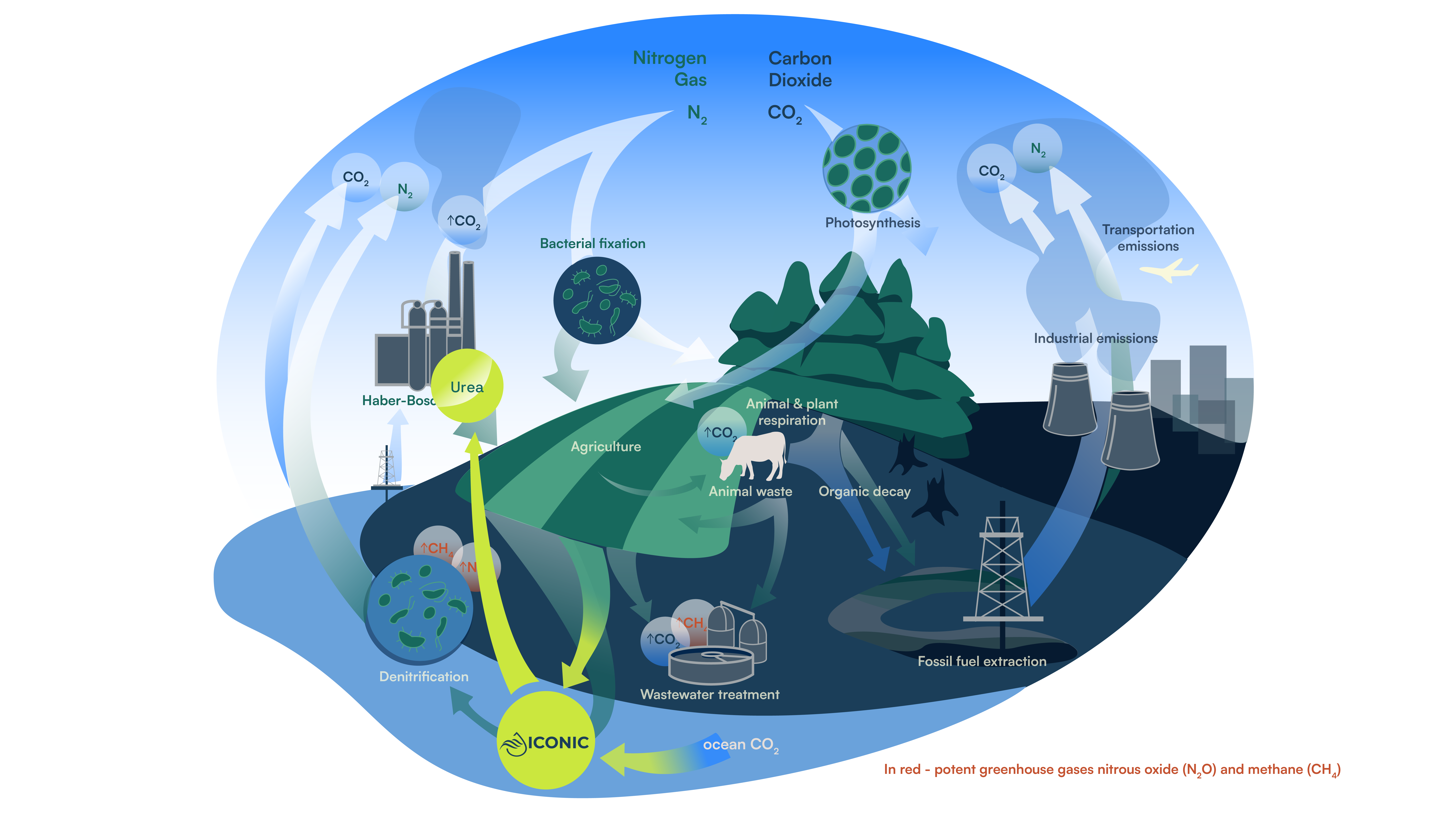
Transforming an idea into reality, however, is never a solo endeavour. Pelayo knew that to make an impact, he needed a team with the right expertise. ICONIC brought together a group of specialists in chemistry, materials science, electrochemistry, and engineering, all working towards a common goal – finding a way to reverse this situation by recovering and recycling excess deleterious nitrate and carbonate species back into fertilizers, thus closing the carbon and nitrogen cycles.
“We were fortunate to already know some brilliant minds from previous collaborations and conferences,”
Pelayo says. “We sought to strike a balance between established leaders in the field and younger researchers full of ambitious ideas. Having fresh perspectives mixed with experience is what drives real innovation.”
As with any pioneering scientific effort, the road was anything but smooth. One major challenge was ensuring that the catalysts – the materials that would make the chemical conversion process possible – did not rely on critical raw materials, which are scarce and heavily regulated in Europe, selected based on criteria such as economic relevance and supply risk.
“It’s a moving target,” Pelayo explains. “The European Commission updates the list of critical raw materials regularly, so we have to constantly adapt and stay ahead of the regulations.”
Another challenge lay in the sheer complexity of the chemical reactions they work with. Beyond catalyst design, the chemistry of nitrogen and carbon species is quite complex, which requires lots of careful analytical experiments and cross-validations to avoid being misled by false positives in detection. “We’re essentially trying to solve a mystery,” Pelayo laughs. “It takes patience, but every experiment, even the ones that don’t go as planned, teaches us something valuable.”
Scientific research can be slow and sometimes frustrating, but for Pelayo and his team, the motivation remains strong. “When things don’t work, we don’t see it as a failure – we see it as a step closer to understanding,” he says. “And we’re always full of ideas. If one approach doesn’t work, we explore another. Also, as in any project, it is critical to find talented people to enable the project’s success.”
Beyond the lab, the real driving force behind ICONIC is the potential to make a tangible difference. The ICONIC technology has the potential to benefit society at large by helping to remediate polluted water ecosystems. By capturing dissolved CO2 and nitrates from the ocean, the project could help prevent the acidification and eutrophication processes, ultimately protecting marine life and improving water conditions. Additionally, as these pollutants also promote the bloom of disease-causing bacteria and viruses, maintaining the water streams in a good balance will ultimately protect our health. On the other hand, the project aims to transform those captured chemicals into useful industry products, such as urea. As urea is the most important fertilizer precursor for agriculture and farming, this could contribute to reducing emissions in its fabrication process.
In the short term, the team is focused on understanding the intricate reaction mechanisms and discovering new catalysts that can efficiently carry out the transformation. “Every small breakthrough brings us closer to making this technology viable,” Pelayo says.
In the long run, ICONIC envisions developing an integrated scalable prototype, one that could be powered by renewable energy and deployed in areas affected by agricultural runoff and industrial pollution. “Imagine a future where we no longer see algae-choked lakes or dead zones in the ocean. Instead, we see water ecosystems thriving again, thanks to technologies that turn pollutants into valuable products.”
For Pelayo, ICONIC is more than just a research project – it’s personal. “Science is often seen as something distant from everyday life, but this project is proof that research can have a direct impact on the world around us.”
ICONIC is a story of determination, collaboration, and the belief that science can offer solutions to some of our most pressing environmental challenges. For Pelayo and his team, the journey is far from over – but with every challenge they overcome, they move one step closer to cleaner waters and a more sustainable future.
