
GUIDED BY HUMANS, POWERED BY AI: PRECISION TOGETHER IN PROSTATE CANCER CARE
Today, many men must choose between life-altering prostate removal or careful long-term monitoring. The EU-funded Robiopsy Project offers an intermediate option: precise needle-based diagnostics and targeted therapy powered by AI-driven robotics.

Spend 15 years building robots for space missions at NASA’s Jet Propulsion Laboratory, and you develop a particular way of seeing the world. Machines are steady and tireless, built to do exactly what they’re told. But it’s humans who decide what matters, who adapt when the unexpected happens, who give those machines purpose. Technology works best not because it replaces human imperfection, but because it’s shaped by human insight, care, responsibility, and experience.
So when the veteran robotics researcher Professor Paolo Fiorini returned to Italy in 2001 to found the ALTAIR laboratory in medical robotics at the University of Verona, he re-entered an academic world full of worthwhile publishing but rarely translated into practical therapies. “At the beginning of the 2000s, there were no surgical robots; it was all avant-garde and experimental,” he recalls. “Companies do their own research, while your technology just sits there in journals. Your research has no real-world impact.”
That frustration planted a seed that, through the EU-funded Robiopsy project, eventually grew into the deep-tech spin-off company Needle Robotics, developing autonomous systems to transform prostate cancer diagnosis and treatment.
Prostate cancer is a slow-burning disease; it’s globally the second most commonly diagnosed cancer in men behind lung cancer, and the number one by incidence in many countries, including EU member states that report more than 335,000 new cases each year.
It is often said that many men die with it, not from it, which complicates the perception and treatment horizon. Unlike other cancers that are easier to detect and often have high recovery rates, many prostate tumours remain undetected for years, sometimes only revealed after spreading. Prostate cancer is the fifth leading cause of death from cancer (after lung, liver, colorectum and stomach) across the world and the third most common cause of death from male-specific cancers in Europe.
Around three million prostate biopsies are performed each year in Europe and the US, yet the process is far from precise. The manual collection of prostate tissue, combined with the limitations of the imperfect biomarker Prostate-Specific Antigen (PSA), makes the exam extremely challenging. As a result, diagnostic errors can exceed 25%.
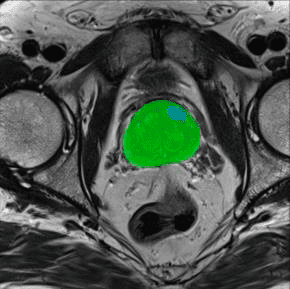
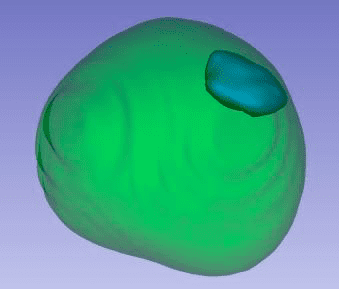
The challenge is partly mechanical. A biopsy needle must be hand-guided through soft tissue to hit a walnut-sized target that’s often nearly invisible on MRI scans. The procedure is delicate, requiring skill and experience. Tiny tumours are easily missed, and the patient goes home relieved, unaware that a malignancy may still be present.
For years, the only definitive cure was the complete removal of the prostate gland. It works, but at a cost. Between 5 and 20 per cent of men undergo the experience of long-term incontinence or sexual dysfunction. As a result, many men opt for active surveillance instead, monitored with annual scans, blood tests, and occasional repeat biopsies.
A BMJ study found incidence rates differ by up to 20-fold across EU countries, yet mortality only differs by about fivefold – pointing to overdiagnosis and overtreatment. Men facing prostate cancer often must choose between two extremes: life-altering surgery or anxious watch-and-wait.
“You have these two opposites; there is nothing in between. It’s an area where the natural limits of human judgment can lead to inconsistencies, and where robotics and artificial intelligence can make a real difference.”
Where academic research meets finance reality
This is where robots re-enter the story. Paolo’s idea was simple: automate prostate biopsy so the needle hits exactly where the scan says it should. The team built a prototype and validated the concept with support from the European Research Council Proof of Concept PROST initiative. “We made a first prototype, published it, and doctors responded enthusiastically: ‘Yes, do it – this is interesting,’” Paolo recalls.
But financial realities soon intervened. While the concept was promising, it wasn’t financially sustainable for hospitals. The setback became a valuable lesson for Paolo. “From a project perspective, it’s not always the initial idea that you can bring to life, but the one that can truly have an impact,” he explains. He didn’t lose faith in the project; he simply gained a clearer understanding of what the technology could achieve within real-world constraints.
The turning point came from a European Innovation Council (EIC) Transition grant that pivoted the project from just diagnosis to a specific treatment approach called focal therapy. Instead of removing the entire prostate, a precisely applied needle burns or freezes only the tumour itself. It’s less radical, preserves more quality of life, and allows the patient to remain under surveillance.
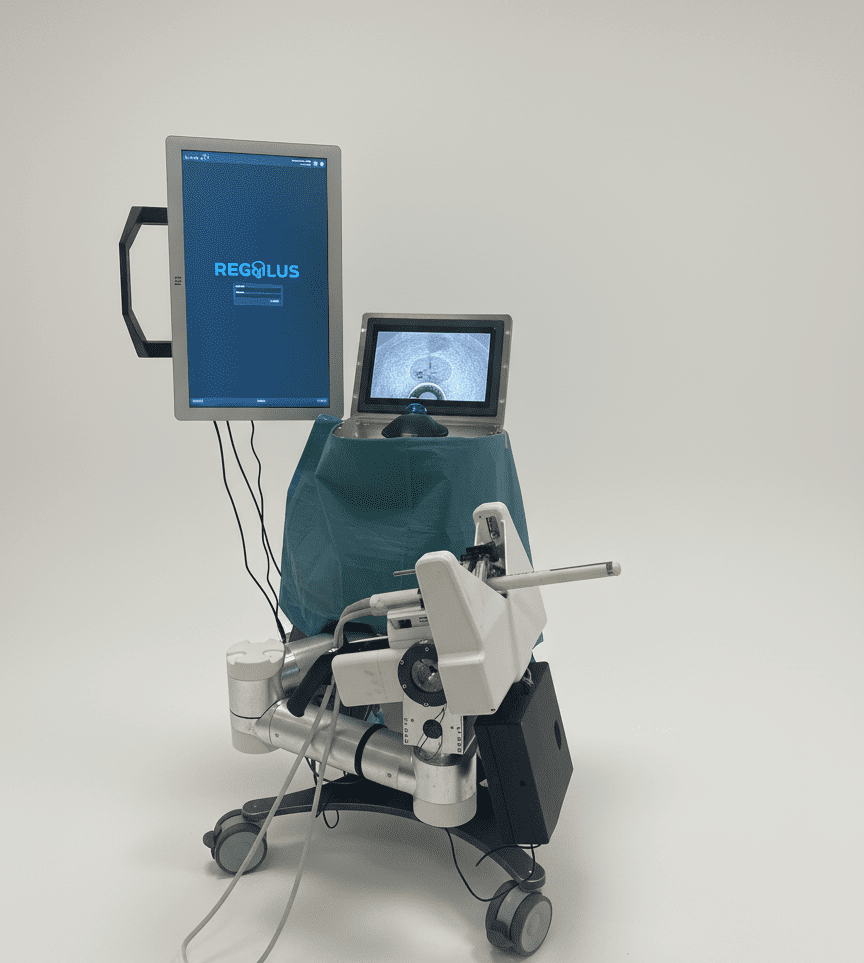
Hitting a small area inside the body demands exquisite precision, and Paolo’s robotics can place a needle or probe at the same point – every time. “Being able to bring this contribution of robotic support to intermediate therapy is the winning advantage,” says Paolo.
As it stands in 2026, Paolo’s research team now aims to conduct calibration tests in the laboratory before final trials on cadavers – the final safety step before the technology is fine-tuned enough for clinical trials on patients. With the potential benefit so high, he’s aware that this is not the only solution to the prostate cancer test-or-treat conundrum on the horizon.
Investors don’t always fully understand deep-tech medical robotics, and talent in AI and robotics is both scarce and costly. “With the researcher’s hat, a time delay is fine. With the entrepreneur’s hat, a delay due to financial reasons can seriously impact the company,” Paolo says.
Now in retirement, Paolo jokes that the talks he now gives to young engineers should be called: From Research to Product – or How to Ruin a Nice Pension. “I still want to contribute,” he says. “Robotics has so much to offer medicine. We just have to find the right path to make it real.”
