

FROM WASTE TO WONDER: THE CIRCULAR GROWTH OF MI-HY
Professor Yannis Yaropoulos, Head of the Department of Civil, Maritime and Environmental Engineering at the University of Southampton, has spent his career exploring how engineering can benefit humanity without harming the environment. “I’ve always been interested in how we can use engineering to benefit humanity, not to the detriment of…

Professor Yannis Yaropoulos, Head of the Department of Civil, Maritime and Environmental Engineering at the University of Southampton, has spent his career exploring how engineering can benefit humanity without harming the environment.
“I’ve always been interested in how we can use engineering to benefit humanity, not to the detriment of the environment.”
With a background in electrical and electronic engineering, signal processing, and autonomous systems, he now leads the Mi-Hy project as Principal Investigator for the University of Southampton, combining his expertise with a vision for sustainable hydroponics. The project coordinator is Professor Rachel Armstrong, from KU Leuven.
The idea for the project began years earlier in Bristol, when Yannis was leading a research centre developing microbial fuel cells capable of generating electricity from organic waste. During a conversation with his colleague, Professor Neil Willey, a plant physiologist dedicated to restoring the quality of crops in the UK, Yanis mentioned that microbial fuel cells also produced a nutrient-rich liquid containing nitrogen, phosphorus, and potassium. Neil immediately asked if this could replace the nutrient solution used in hydroponic systems, sparking a quick experiment that yielded promising results. “I wasn’t sure at first, but we tried a quick and dirty experiment, and the results were very promising,” Yannis recalls. This small success laid the foundation for what would become the Mi-Hy project, eventually forming a European consortium, including the University of Southampton, the University of the West of England, KU Leuven, Sony CSL in Paris, the Spanish National Research Council, the Faculty of Technology Novi Sad, and Biofaction in Austria. “It was a very organic process,” Yannis explains, “quite fitting for the work we do.” The team secured an EIC Pathfinder grant, turning the project’s underlying idea into reality.
Mi-Hy brings together Microbial Fuel Cell technology and hydroponics for the first time, introducing a prosthetic rhizosphere, an extended microbial community in the otherwise soil-less hydroponic environment. The system modulates nitrogen forms, optimises plant root microbiomes for more efficient nutrient uptake, and mobilises phosphorus, reducing the need for chemical fertilisers. It turns carbon into biomass and reclaims nitrogen from wastewater streams, linking shared microbial communities to create a circular, sustainable platform. The bioelectricity system is optimised to generate electricity from wastewater at high efficiency, drives wavelength-specific LEDs to enhance photosynthesis, and recovers valuable biomolecules through microbial electrosynthesis. Because both systems share microbial constituents, they operate without fossil-fuel energy. The team also designs biofilms using metabolic engineering of wild-type symbiotic strains, creating a next-generation hydroponics system with applications in agriculture and urban environments.
In the first year and a half, the team demonstrated that microbial fuel cells fed with human or municipal wastewater could generate enough electricity to power LED lights, which could be used for hydroponic crops at the required wavelength while simultaneously producing a nutrient solution called catholyte (electrolyte in the cathode half-cell) that could replace commercial fertilisers. “The powering of the LEDs is not trivial,” Yannis explains. “We found that when light slowly increases and decreases, like a natural sunrise and sunset, it is far better for the plants, and it also uses less energy. The microbial fuel cells can match that operation perfectly.” The nutrient solution can also be tailored for different crops by adjusting nitrogen, phosphorus, and potassium levels. “We can pretty much tailor the concentration of nitrogen relative to phosphate relative to potassium and make it suitable for the plant or crop that we are aiming to grow,” he adds.
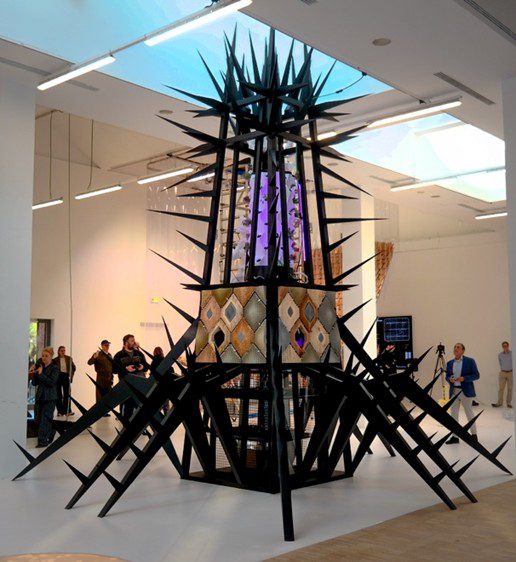
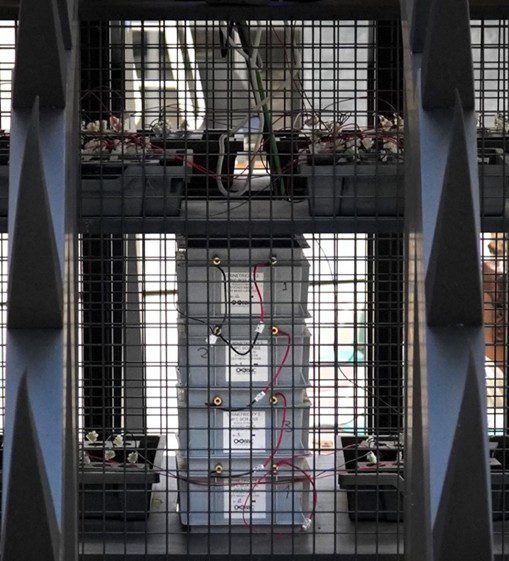
Looking ahead, the team aims to position the hybrid system as a flexible platform, allowing growers to select the appropriate microbes and crops and feed the system with local waste. At larger scales, the technology could transform municipal and agricultural food production. Yannis recalls, “If Neil says we have scientifically proven we’ve lost the flavour, the taste in our crops, fruit and vegetables in the UK, there’s a real need to bring that back. And this helps the agricultural sector, it helps human health, and it helps the environment.”
The team’s collaboration, built on long-standing professional relationships, has been central
to overcoming challenges and advancing the project.
“Once even new relationships were involved, I’m a firm believer in good intentions. When intentions are good, and we’re all travelling in the same direction, then those challenges are common for everyone, and helping each other is a lot easier to overcome.”
For Yannis personally, Mi-Hy has been transformative. He joined the University of Southampton in late 2021, during COVID-19 restrictions and ongoing uncertainty following Brexit. Securing a major European Innovation Council project under these conditions was significant, demonstrating that cross-European collaboration could succeed even in difficult times.
“It was quite confusing and very uncertain to be able to be successful in a large European project was quite significant. It also helped me at least be in a position to alleviate some of the concerns of some of my colleagues who still had doubts about the European research scene.”
The project is a reminder that innovation is not only about technology but also about people, trust, and the ability to turn challenges into opportunities. “We are in a university in the UK, but we’ve been successful in this large project,” he says. “We should continue working with our European partners, put the politics to one side. We just need to focus on science.” In the end, Mi-Hy began with a simple question about the potential of waste and is now showing how engineering, biology, and human collaboration can transform the way we grow food, use energy, and imagine sustainable cities.
Photo credits:
Figures 1, 2: Mi-Hy project
