

CLIMATE-SMART PLANT BREEDING: AI’S ROLE IN FEEDING A WARMING WORLD
Agriculture is one of the top three greenhouse gas emitters along with transport and power but attracts far less innovation funding to tackle the carbon footprint. Computomics is addressing this gap with machine learning solutions based on human collaboration and data sharing to help meet the world’s sustainable breeding goals.

When consumers place fruit and vegetables into the food baskets, how many people really know how long it takes plant geneticists to breed that heat-resistant corn? Blueberries with the extra antioxidants, or the ‘super broccoli’ with the extra compounds that could protect against cancer?
Conventional plant-breeding techniques typically take at least eight years (tomato, rice) and up to 20 years to produce a new commercially viable variety. And with climate change and extreme weather conditions threatening global food security, the need for faster routes to climate-resilient and water and resource efficient crops has never been greater – but the time to make them is still measured in years or decades.
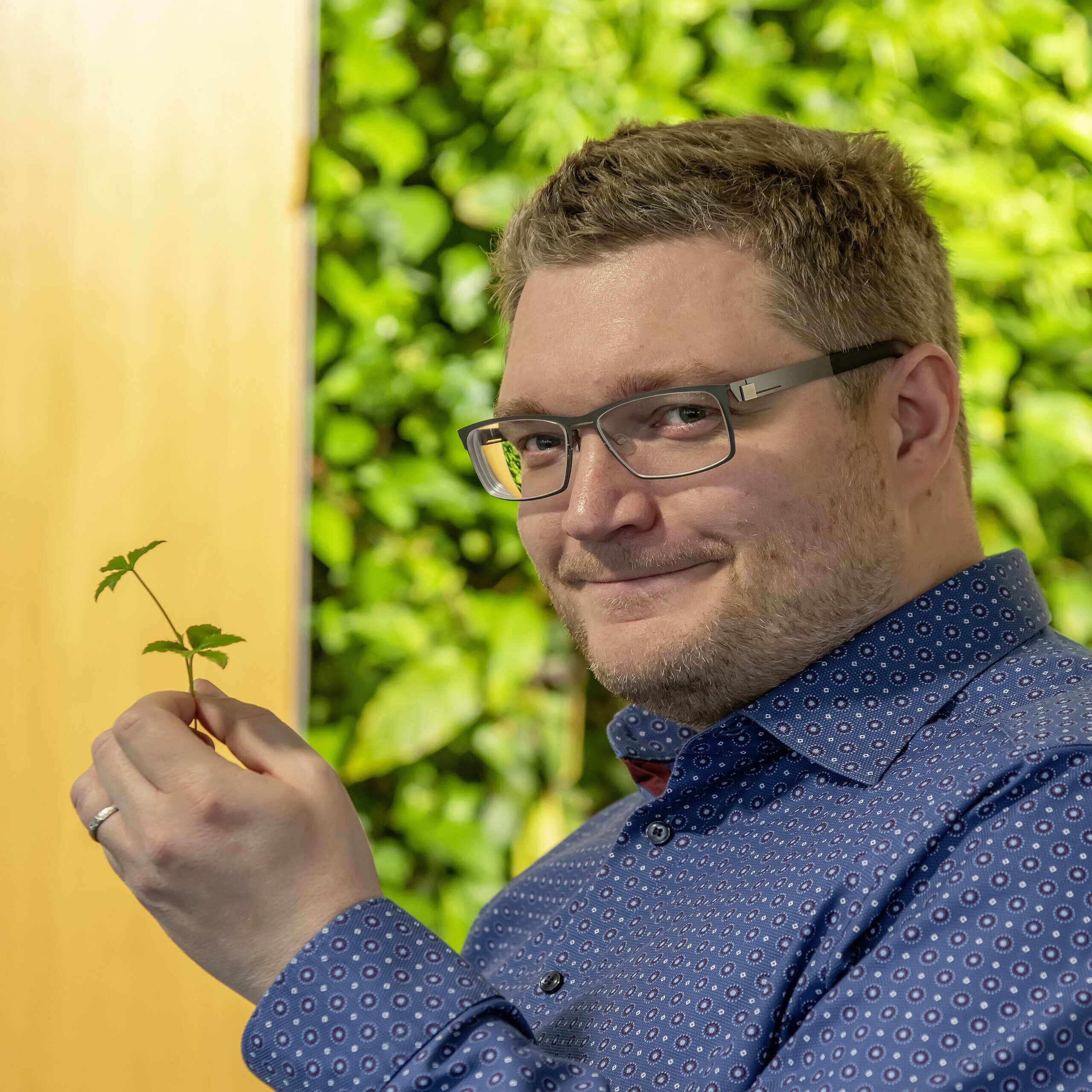
Plant scientists have long attributed the delay partly to large agricultural companies not sharing data sets for fear of losing out to competitors or faster, more innovative start-up rivals. When machine learning researcher Sebastian Schultheiss, then based at the Max Planck Institute for Biology, began to investigate the data, he realised that vast plant breeding datasets were being analysed only with basic statistical methods. “Coming from a machine learning and AI background, it seemed natural to try and apply these more modern methods,” says Sebastian.
That realisation supported by pioneering European Innovation Council (EIC) funding became the seed for Computomics, the company Sebastian co-founded in Germany in 2012. More than a decade later, their initiative has gotten some of the biggest players in the crops market to collaborate and share their data, slashing years off development time. “Our technology cuts down the time it takes to develop a new variety, typically eight to twelve years,” says Sebastian. “We can help people achieve it six years faster.”
The company’s most advanced technology is xSeedScore®, developed in the EIC accelerator project TRAIT 4.0 (TRansition to agriculture 4.0: increasing crop resiliency with Artificial Intelligence Technology), that uses machine learning in plant breeding to address urgent global challenges such as enhancing global food security, tackling climate resiliency, and promoting resource efficiency.
Models and politics
The idea for the project came from recognising that plant breeding methods were outdated compared to their potential. For example, breeders were largely ignoring environmental factors in modelling genetic outcomes, copying methods from animal breeding. But why? In cattle, environmental differences can be ignored: animals eat the same food and live in similar barns. In fields, conditions vary wildly.
“Naively, we were basically saying ‘we have to have information about this plant in a certain environment’ and included that as a parameter. We found out later that in the typical state-of-the-art method, people actually ignored it,”
explains Sebastian. “Somehow plant breeders discovered that method, used it for themselves, telling themselves it’s fine to ignore the environment. But they ended up with very low accuracy rates compared to what we were able to do.”
When the team at Computomics simply added environmental variables to their models, the accuracy gains from including it were striking; it was their first true ‘Eureka! moment.
Another outmoded practice the team came up against was an unwillingness to share data. Commercial breeders are big companies in fierce competition, and the global market is worth between $60Bn and around $90Bn depending on who you ask. What they have in common is that their most precious asset is their data; convincing them to share it proved difficult.
“We told them it would be a good idea to have some data being pooled because everyone would be benefiting from it,” says Sebastian, describing the delicate negotiations that took five years. The companies were reassured that the data would be anonymised and kept separate. “Only slowly can you get a critical mass of people together who say, okay, let’s try this together.”
The breakthrough came in wheat. The German research institute IPK helped broker an agreement among five wheat breeding companies to pool anonymised data. The results were dramatic: shared models performed far better, revealing that collaboration could unlock new accuracy and resilience across the industry.
Across the pond
For years, most of Computomics’ customers were in the US, where large agricultural companies are quicker to adopt new technologies. But based in Europe, the team wanted to make an impact closer to home. That became possible with €2.4 million EIC Accelerator funding, a support mechanism focused on DeepTech innovations to facilitate the transition from concept to market-ready products, providing mentorship and access to a network of investors and business experts.
The Accelerator grant allowed Computomics to extend their technology to European crops, onboard new customers, and move their tools from Technology Readiness Level (TRL) 7 to TRL 8 – the level of maturity where commercial deployment becomes viable.
XSeedScore® powers TRAIT 4.0 – Computomics’ proprietary machine learning-based technology – that integrates environmental, genomic, and climate data to predict the performance of complex plant traits for any specific need, climate and location. The program also simulates the performance of all future crosses or hybrids and can uncover high-yielding combinations that might otherwise be discarded.
Shifting the message to climate smart crops
As the project progressed, Computomics realised the real story was not simply computational efficiency, but about climate-smart breeding. They no longer see their work as just about keeping plants growing in a hotter, drier Europe; it’s about preventing agriculture from becoming an even bigger driver of climate change in a world where consumers rarely think about the climate cost of the food they buy.
Agriculture will be hugely affected by climate change yet is also one of its largest contributors. Food production is responsible for 25% of the world’s greenhouse gas emissions. Projects like TRAIT4.0 show that innovation can blend AI with biology, and foster real collaboration where competition once dominated; in that realm at least, Computomics has demonstrated a future where food production is faster, smarter, and more collaborative.
“Our work is not just about having plants that will still grow now,” says Sebastian. “It’s also about stopping things from getting worse or even improving the situation again.”
