
SPACE DREAMS: A EUROPEAN INNOVATION STORY
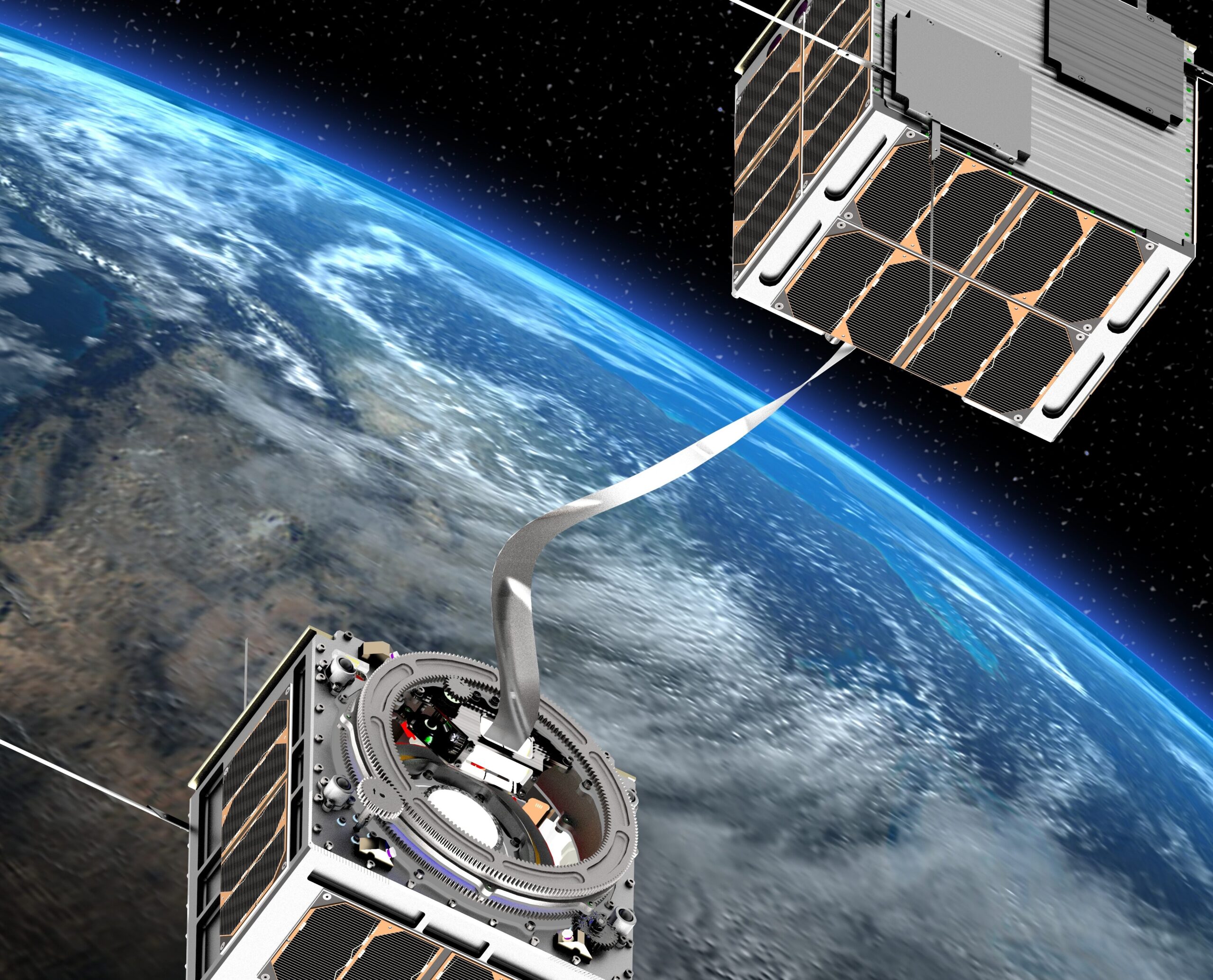
In the world of space research, the distance between an idea and reality can be as close as the moon or as far as a star – depending on perspective. One such bold idea, long cherished by aerospace engineers, is space propulsion technology free of propellant. Today, that vision is taking shape through the E.T.PACK-F project and the innovative startup PERSEI Space.

The journey began with inspiration drawn from the 1960s concept of Electrodynamic Tethers (EDTs), long conductors in orbit that exchange momentum with the Earth’s magnetosphere. The technology allows spacecraft to generate power, change their orbits, or deorbit safely, all without using propellant. Although several experiments, including NASA’s Plasma Motor Generator in 1993, had shown EDTs’ potential, the idea remained largely in the academic domain.
That changed in 2019 with the launch of E.T.PACK (Electrodynamic Tether Technology for Passive Consumable-less Deorbit Kit), a FET OPEN project funded by the European Innovation Council (EIC). Led by Professor Gonzalo Sánchez Arriaga, aeronautical engineer and project coordinator, the team set out to move EDTs from the lab to the market.
Gonzalo explains:
“Our final goal, is to prepare products that, leveraged on the unique properties of EDTs, provide practical solutions to the new needs of the space sector, like the proliferation of space debris, while boosting emerging markets like in-orbit servicing.”
The path to securing funding was not easy. Over five years, the team submitted numerous proposals to European, national, and regional institutions, many of which received excellent scores but were ultimately not funded. Gonzalo recalls: “It was a tough period, but it helped filter the consortium. Only the most resilient and committed partners stayed on board.”
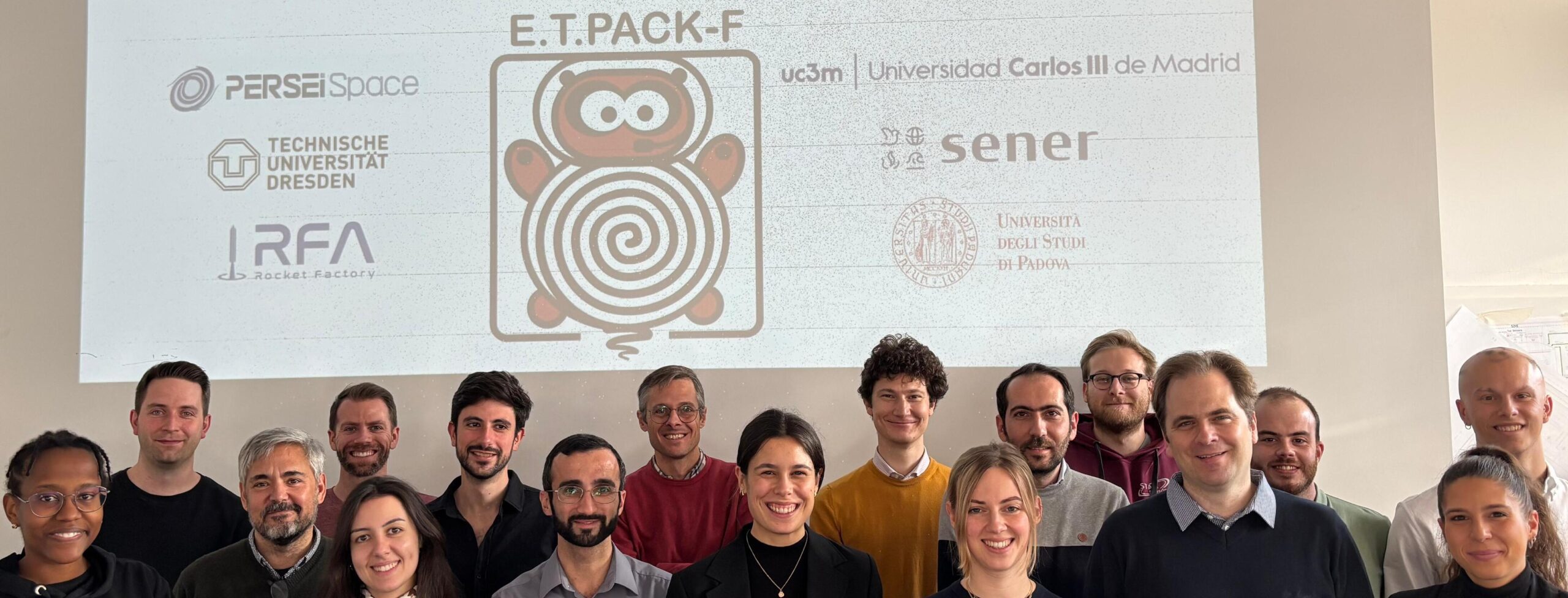
That resilience formed the core of the E.T.PACK Initiative, comprising three leading European universities: Università di Padova, Technische Universität Dresden, and Universidad Carlos III de Madrid. Over time, the team worked on several EDT-focused projects, with the support of the EIC and the European Space Agency (ESA). Each university contributed unique expertise, along with the enthusiasm and technical skills of its people. The mix of young and experienced members from different disciplines was key to finding solutions to a wide range of technical issues. The E.T.PACK-F Team, in addition to the three university partners, also includes the Spanish company SENER Aerospacial and the German start-up RFA Rocket Factory.
The transition from idea to hardware brought numerous technical challenges. “In 2019, deorbiting wasn’t mandatory, and regulations were relaxed. The market didn’t even exist,” says Gonzalo. But the EIC’s visionary approach, combined with the interdisciplinary strength and dedication of the team, helped them push forward. Starting from scratch, with little European heritage in EDT hardware, the team designed, built, and tested a working prototype. The success of E.T.PACK culminated in a demonstration of a concept that achieved Technology Readiness Level (TRL) 4, proving that the technology worked.
The follow-up project, E.T.PACK-F, focused on building a flight-ready device. The engineering qualification model of the deorbit system was successfully developed, an achievement of major significance in Europe. It showed that an autonomous deorbit device based on EDTs could be packed into just 12U and weigh under 20 kg.
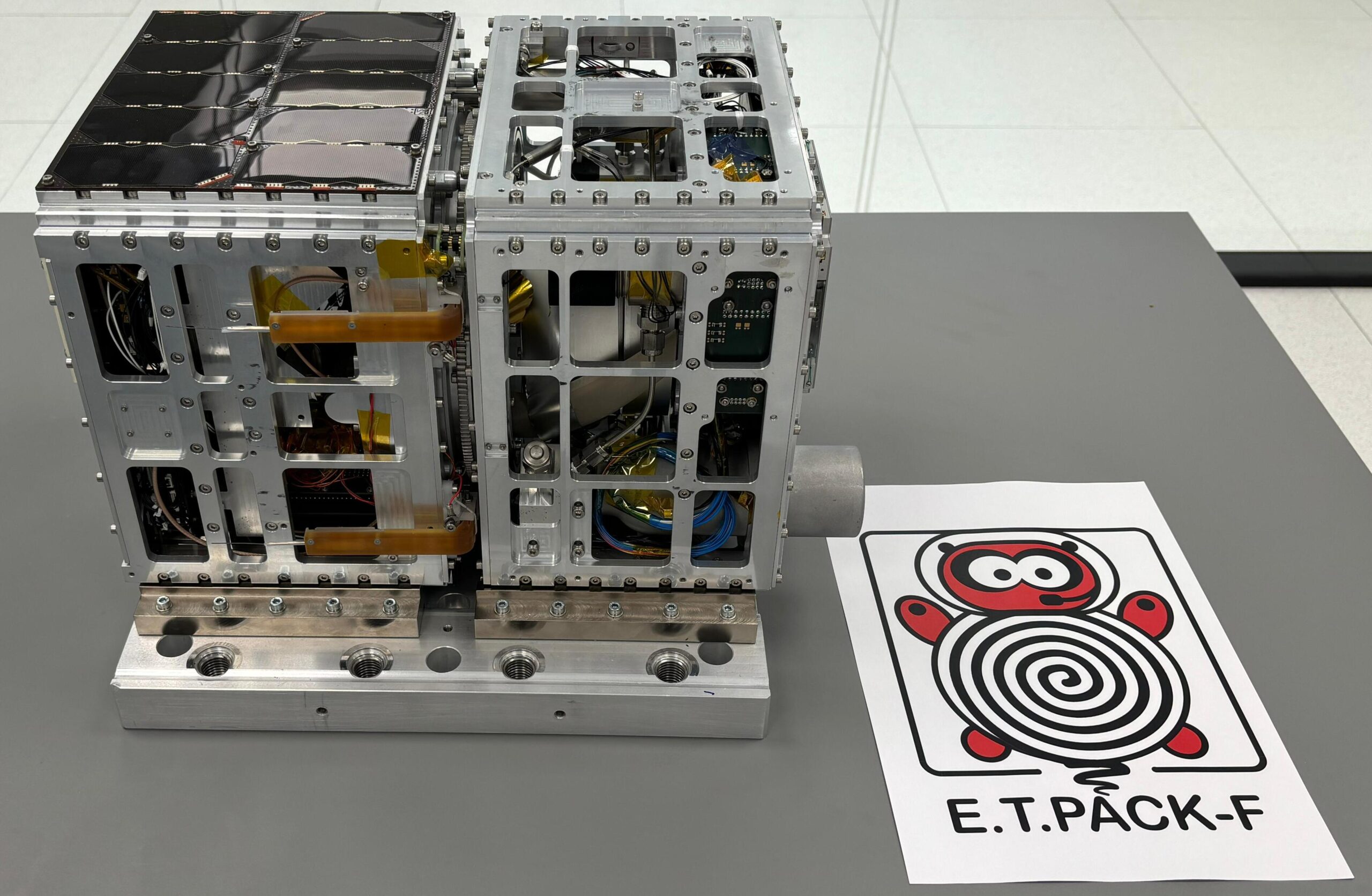
The flight model is now being finalised and will undergo its in-orbit demonstration (IOD) in 2026, supported by the EC-ESA Flight Ticket Initiative. If successful, it will be the first-ever in-orbit demonstration of a bare tether system equipped with a hollow cathode, the key architecture for high-performance EDT systems. The IOD aims to shift the perception of EDTs from theoretical to commercially viable.
In 2023, the core researchers behind E.T.PACK-F founded PERSEI Space, a startup dedicated to bringing EDT technology to market. Born from years of collaboration between top European universities, PERSEI now leads the in-orbit demonstration of the E.T.PACK-F deorbit device, set for launch in the next year.
The company secured key intellectual property and ownership of the E.T.PACK-F hardware through licensing agreements with project partners. Although still in its early stages, PERSEI is already offering consultancy services utilising its mission analysis software, BETsMA v2.0, and is preparing its first commercial hardware product. To support this growth, the team plans to submit an EIC Accelerator proposal in late 2025.
PERSEI stands as a bridge between academic innovation and commercial application, continuing the E.T.PACK Initiative’s mission to turn EDT technology into a practical tool for the future of space.
The story of E.T.PACK is not just about advanced science, but about human resilience, creativity, and cooperation. Gonzalo admits:
“The project profoundly affected all team members; the level of effort exceeded that of a regular job. But we are just cogs in a complex mechanism that is working harmoniously to make advances in a technology that can open new horizons in space propulsion.”
Despite the technical, financial, and logistical obstacles, the team’s determination never faltered. “There were hard days,” Gonzalo says, “but those are the days when you learn the most. And in the end, nothing compares to the satisfaction of seeing something that was once just a thought becoming real.”
