

WHEN FAÇADES ADAPT TO WEATHER CONDITIONS: BEYOND THE WALL OF CONVENTIONAL DESIGN
The idea behind the ZERAF project, funded by the European Innovation Council (EIC), didn’t emerge in a flash of inspiration, but rather through years of questioning, research, and collaboration. For Miren Juaristi Gutierrez, an architect with a passion for sustainable design and project coordinator, it began more than a…
The idea behind the ZERAF project, funded by the European Innovation Council (EIC), didn’t emerge in a flash of inspiration, but rather through years of questioning, research, and collaboration. For Miren Juaristi Gutierrez, an architect with a passion for sustainable design and project coordinator, it began more than a decade ago when she first encountered Roel Loonen’s work on adaptive façades. While she was fascinated by the concept of buildings responding dynamically to climate conditions, adapting to them to reduce energy demand while maintaining comfort, something important stood out.
“Most of the ideas focused on glass,” she noted. “As an architect, I found that troubling. It pushed design towards an all-glass aesthetic and ignored the potential of opaque façades.” Leaving this gap in the research landscape realisation unfolded, led her to pursue a PhD specifically focused on adaptive opaque façades, and planted the first seeds of what would become ZERAF, a project dedicated to developing adaptive opaque façades that not only perform thermally but also respect architectural diversity and material innovation.
During her PhD, Miren focused on understanding how opaque envelopes could actively regulate heat through radiation, conduction, and convection. While many theoretical concepts existed, few had been tested or built, and most failed to consider the broader functionality of real façades. Her deep dive into the fundamental mechanics of heat transfer shaped her understanding, but the turning point came when she joined Eurac Research in Italy. “It wasn’t a single “eureka” moment, but rather a gradual maturation of ideas”, she recalls.
“I presented a concept I’d been working on,” she recalled. “And Roberto Lollini, who leads the research group, suggested rethinking the façade’s configuration, using fewer, multifunctional materials instead of layering function upon function.” That insight helped crystallise ZERAF: a disruptive façade concept for zero-carbon buildings made of a kinetic cladding that can control heat gains by radiation and heat losses by natural convection and an active insulation system, able to change its thermal transmittance properties.
Specifically, the concept developed for ZERAF includes controlling heat gains and losses, not just through passive design, but through active, smart materials, such as shape memory alloys for the actuator of the kinetic cladding, as well as innovative bio-based polyurethanes for the realisation of the active insulation.
But an idea, no matter how promising it may be, needs the right people to bring it to life. Drawing on networks she had built during her doctoral work and through the European COST Action on Adaptive Facades, Miren began naturally assembling a team. Thanks to the COST Network, she found the Eurac Research in Italy, specialised in labs and experts able to test and characterize innovative façade systems, that really fitted her postdoctoral studies.
Her networking activities during her PhD laid the groundwork for the creation of this new team, and Eurac Research made the process straightforward. Building on previous collaborations with Roel Loonen (Eindhoven University of Technology) and Francesco Isaia (at that moment Politecnico di Torino, now Eurac Research), who worked with her on climate analysis related to adaptive façades, as well as with Miguel Callejas, whose start-up, Ingpuls Smart Shadings, explores shape memory alloys for moving architectural elements, proved to be a perfect fit for ZERAF’s kinetic cladding. Roel also facilitated connections with Eugene Peeters and Riné Dona (Active Insulation System), who had researched the concept of active insulation, another cornerstone of the ZERAF system.
Meanwhile, Eurac Research’s collaboration with INDRESMAT in another European project introduced them to Pablo R. Outón, whose company was developing bio-polyurethane materials. “It was exactly what we needed,” said Miren. “A sustainable, high-performance insulation material that could adapt to environmental demands.”
The team’s shared vision for sustainability and innovation made building the consortium a natural process. Supported by the EIC Pathfinder programme, ZERAF officially launched. Later, through the Hop-On facility, NOVA University joined the consortium to assess social acceptance, an often overlooked but essential part of bringing new technologies to market.
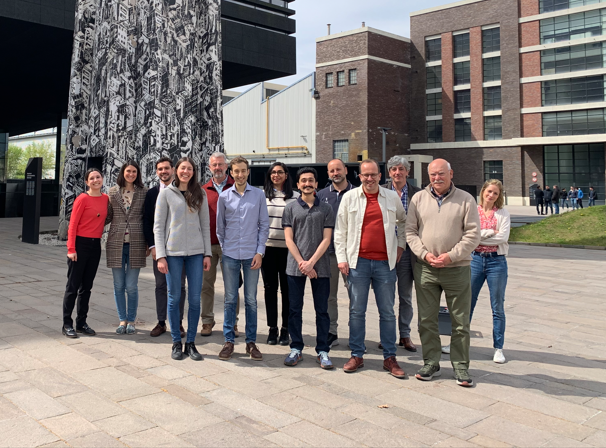
Of course, the path hasn’t been smooth. “We face daily challenges,” Miren admitted. “From fine-tuning the performance of shape memory alloys, to ensuring bio-polyurethane meets safety and sustainability criteria, to testing how the entire system behaves as a façade.” Balancing technical complexity with simplicity and scalability for the construction industry remains a constant tension.
Moreover, understanding how people perceive and accept such innovations is just as important as the engineering. That’s why NOVA’s work on behavioural research and stakeholder engagement is playing such a central role.
Despite the challenges, the team stays motivated by the progress they’re making, step by step. “We are already seeing encouraging results […] As project coordinator, I try to remember that and constantly review our long-term objectives to ensure that we are on track. Having a realistic timeline for achieving our objectives is key to recognizing the progress we are making”, she concludes.
Miren attributes much of the project’s resilience to the people behind it. “It’s been incredibly rewarding to work with such a diverse team, different disciplines, cultures, and generations. There’s a deep respect and real collaboration that keeps us moving forward.”
For her, the project is not just a professional pursuit, but a personal journey. From her PhD years at the University of Navarra with visiting experiences at TU Delft and Politecnico di Torino, to moving to Bolzano for her postdoc, and even a short stint in Colorado to learn about movable insulation testing, ZERAF has shaped her path across countries and ideas. “This project has given me the chance to grow not only as a researcher but as a person,” she reflected.
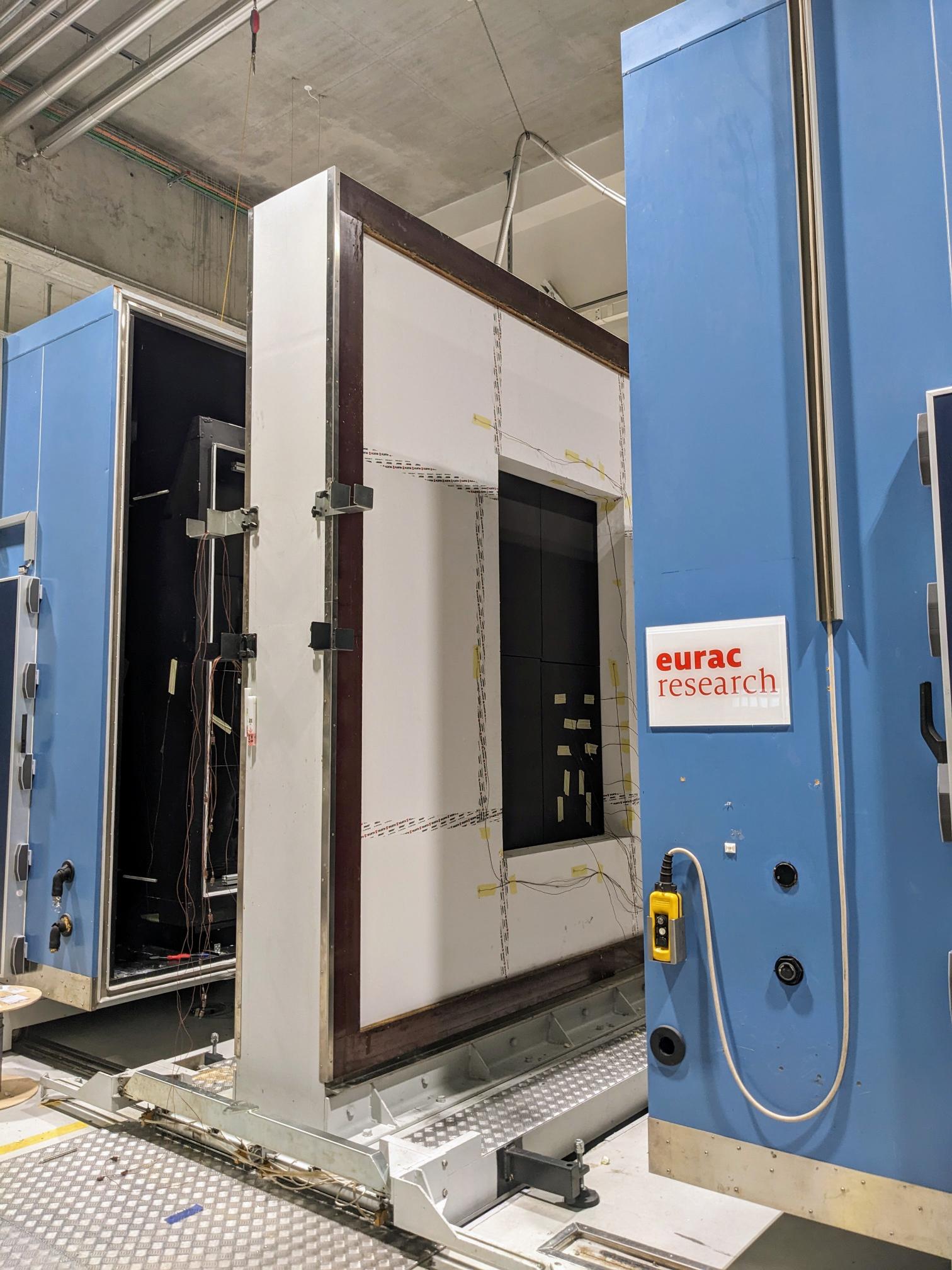
In the short term, ZERAF aims to demonstrate that adaptive opaque façades can substantially reduce the energy demand of buildings while improving occupant comfort. In the longer term, the goal is to establish the technology as a new standard for zero-carbon building envelopes, adaptable to different climates and building types across Europe.
For others thinking of embarking on a research journey, Miren offers honest encouragement: “Research moves slowly. There will be setbacks. But if you stay curious, surround yourself with the right people, and keep the bigger picture in sight, the rewards are worth it.”
Photo by Muhd Asyraaf on Unsplash
