
TURNING THEORY INTO POWER: PROF. STEFFEN HARDT’S JOURNEY IN TRANSLATE
When people think about scientific breakthroughs, they often picture a lone person in a lab. However, real innovation, especially when it comes to solving global challenges, is rarely a solo effort. It's about collaboration across borders, disciplines, and perspectives. That’s exactly what’s happening in the TRANSLATE project.
TRANSLATE is a European collaboration involving institutions from Ireland, Germany, Latvia, and Spain, all working toward one bold goal: converting waste heat into electricity using advanced fluid dynamics at the nanoscale. Among the key contributors is the Institute for Nano- and Microfluidics (NMF) at TU Darmstadt (TUD), led by Professor Steffen Hardt.
“The project is about turning something we usually ignore – low-grade waste heat – into something useful,” Steffen explains. “That kind of challenge really excites me. It’s a chance to apply fundamental science to something with real-world impact.”
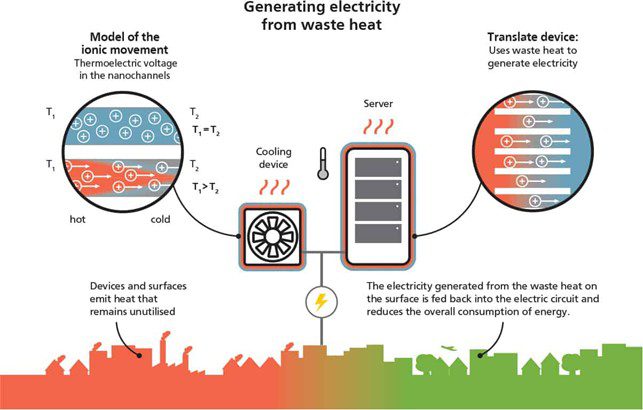
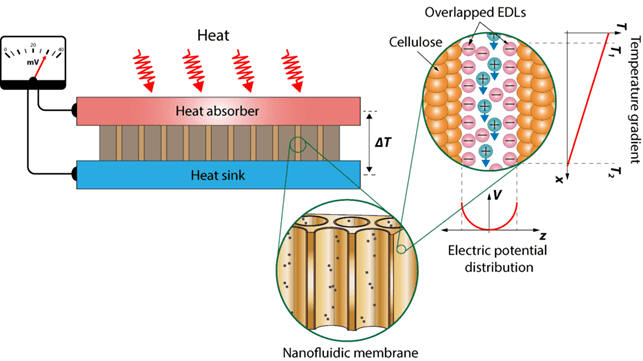
But the journey didn’t begin with TRANSLATE. Nearly a decade ago, Steffen and his team published a theoretical paper exploring the use of electrolytes in nanochannels to generate electricity from temperature differences. The paper revealed that the thermal voltage – or the degree to which thermal energy can be converted into electrical energy – could be significantly higher when a liquid electrolyte is confined within a narrow channel. This phenomenon, known as the confinement effect, has the potential to greatly enhance thermoelectric energy conversion. Back in 2016, it was a niche concept, but one that quickly caught the attention of other researchers, and specifically Justin Holmes, who would later coordinate the TRANSLATE project.
“When Justin reached out, I was pleasantly surprised,” Steffen recalls. “You write something theoretical, put it out there, and sometimes it resonates beyond what you expected.”
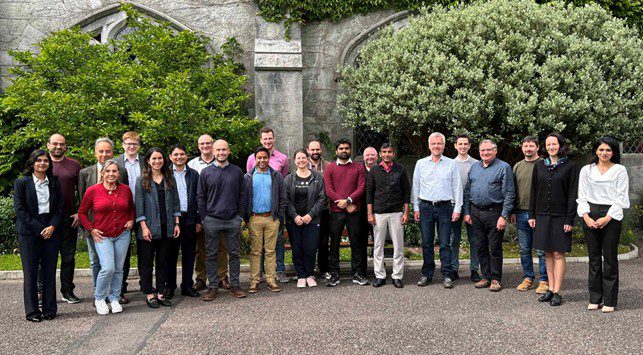
This partnership brought TU Darmstadt into a consortium that includes University College Cork, Tyndall National Institute, University of Latvia, Cidete, and UCC Academy. Each partner plays a crucial role, but for Steffen, joining as a theoretical modelling expert meant navigating a steep learning curve and stepping into unfamiliar territory.
“At first, the experiments didn’t align with our models at all,” he recalls. “There was a moment where we thought, ‘Either our assumptions are wrong, or something else is going on here.’ It was frustrating, but also incredibly valuable in terms of collaboration – that’s been the most notable part for me.”
The disconnect between theory and experiment became a turning point. It encouraged the teams to dig deeper, refine their models, and question their assumptions. That’s often an iterative process, with adjustments made on one side in response to adjustments on the other side.
“It’s one thing to publish a paper in a physics journal,” Steffen says. “It’s another to collaborate with people who are trying to build something tangible out of it. You have to listen more, adapt, and sometimes admit when your model just doesn’t fit the reality.”
In terms of short-term impact, Professor Steffen Hardt and his team, through Work Package 1, have already made notable progress. They’ve developed promising ideas to enhance thermoelectric energy conversion, including the use of ionic liquids and weak electrolytes. While their results so far have been theoretical, they’ve already published one paper titled “Giant thermoelectric response of confined electrolytes with thermally activated charge carrier generation” in Physical Review Letters, and are in the final stages of preparing another. This marks an important short-term achievement: not only have they generated new ideas, but they’ve also demonstrated their potential. Specifically, their work has shown that it should be possible to improve thermal voltage by a factor of more than 10 compared to what they reported almost 10 years ago, significantly advancing the viability of these concepts.
“Science is difficult. It’s unexplored territory. You need to consider that you may be disappointed that your expectations are not met. But then you just need to keep on trying. That’s what we communicate,” Steffen says.
He reminds his students that failure is not just inevitable, but essential. “Research is hard. It can be slow and messy. But when you finally see something work – when the data clicks, or the model matches reality – it’s one of the best feelings in the world.”
For Steffen, his passion for science remains the driving force behind his work. His love for solving scientific problems and engaging in discussions with his PhD students is central to his daily life. “I really like to think about scientific problems, and I really like to communicate and have discussions with my PhD students,” he shares.
However, pursuing a career in science comes with its sacrifices. “If you want to pursue a career in science, you also have to give up a couple of other things. I like music. I’m a hobby musician, but I haven’t played in a band for many years now because I just don’t have time,” he admits. For Steffen, being a professor, particularly with ambitious goals, means a job that demands full-time dedication and inevitably impacts other aspects of life.
“It has a huge impact. It’s more than a full-time job, and it impacts your life a lot. But it also gives you a lot of satisfaction,” he reflects. “It’s a super nice and super interesting job. You can be creative. You can do things that you can’t do in other jobs.”
The TRANSLATE project still has a long way to go, but Steffen’s story already stands as a powerful example of how curiosity, persistence, and collaboration can turn theoretical ideas into transformative innovations.
“To anyone thinking of starting a research journey,” he says, “don’t worry about being the smartest person in the room. Just be curious, stay humble, and don’t be afraid to ask for help. That’s how real progress happens.”
