

REACHING NEW HEIGHTS: IPROP’S VISION TO PIONEER ION PROPULSION FOR A SUSTAINABLE FUTURE
The IPROP project, led by Marco Belan of Politecnico di Milano, is innovating aviation with ion propulsion technology, offering fuel-free, low-emission air travel. By harnessing air for thrust, the project explores applications like eco-friendly airships and reusable stratospheric vehicles, reshaping the future of aerospace engineering.
In the world of aerospace engineering, new ideas drive the solutions to challenges and shape the future. IPROP stands at the forefront of aerospace engineering, seeking to innovate air travel with sustainable ion propulsion. Led by Marco Belan, professor at the Department of Aerospace Science and Technology (DAER) at Politecnico di Milano, this project envisions a cleaner, fuel-free future for flight.
IPROP focuses on developing ion propulsion technology for air vehicles, a concept that has long been used in space exploration but is now making its way into Earth’s atmosphere, opening new possibilities for low-emission, high-efficiency flight. Unlike traditional propulsion methods, ion propulsion doesn’t rely on carrying fuel; instead, it ionises the air itself to generate thrust, offering a cleaner, more efficient way to power aircraft.
Marco’s journey into the world of aerospace engineering is an interesting and multi-faceted one. With a degree in Physic, he went on to pursue a doctorate in aerospace engineering, beginning his career in Turin. He later moved to Seattle to further his studies before settling in Milan in the early 2000s, where he became a member of the aerospace department. While his background initially focused on fluid dynamics, his interests have evolved over the years to include plasma research, which has taken him into highly interdisciplinary areas of study and forging new valuable partnerships.
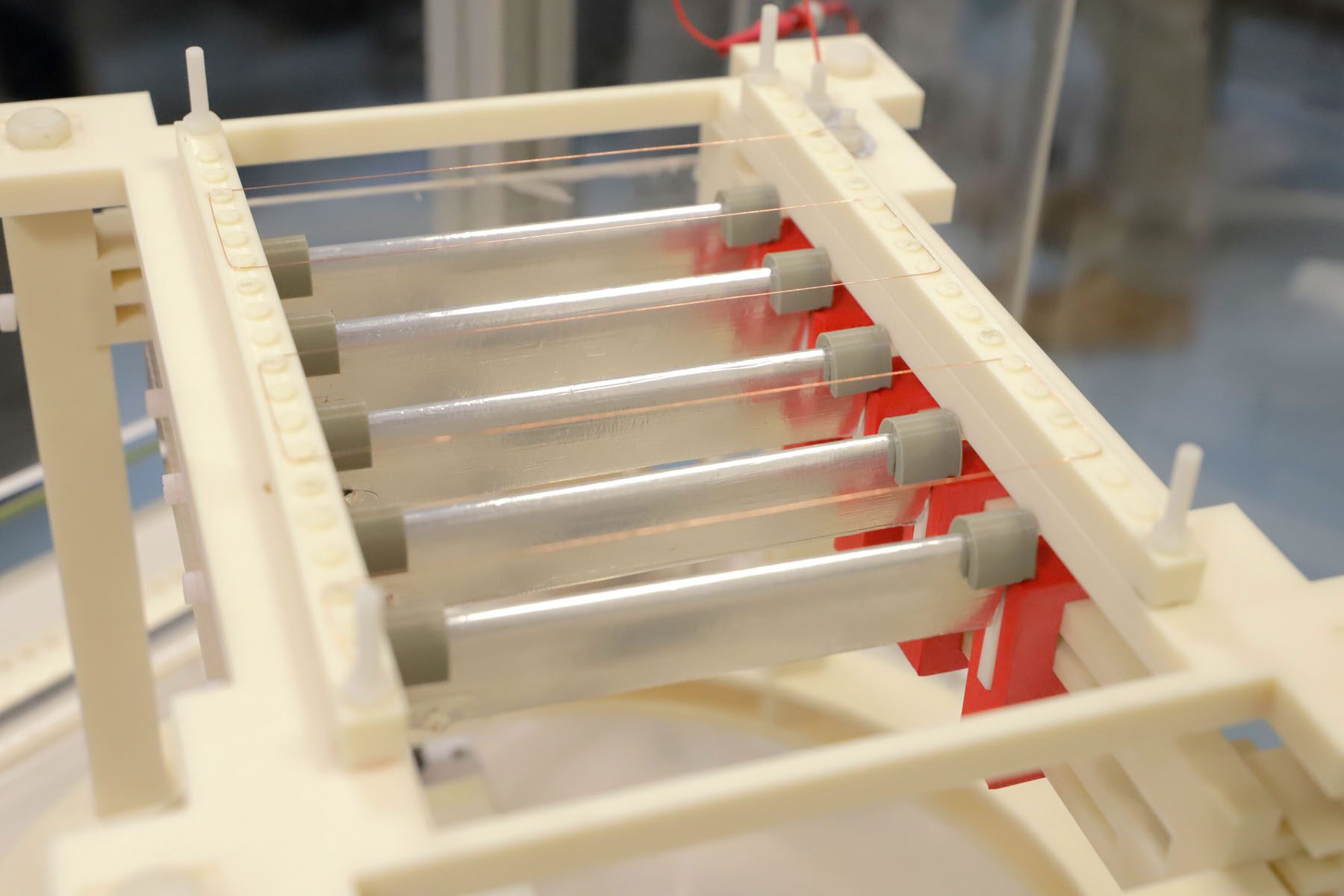
“I’ve always been drawn to areas that allowed me to explore new ideas,” Marco explains. “After years of working in more conventional areas, I began to feel saturated and knew it was time for a new challenge.” He began fascinated by ion propulsion, a technology that has been used in space for years but remains largely unexplored in atmospheric applications.
“I wanted to break new ground”
Marco, inspired by this unexplored territory, assembled a group of students eager to explore unconventional ideas, whose interests extended far beyond their primary fields of study, ultimately converging on the field of air-breathing ion propulsion. “I wanted to break new ground,” he says. “I felt there was a great potential here, but it would require significant funding and collaboration to truly explore its possibilities.” He then began seeking grant from the European Union to properly support the project, on advancing high-risk, low-TRL (Technology Readiness Level) research.
“They thought it was too difficult or unrealistic. But after more discussions, they began to understand the vision”
“It was exactly what I was looking for,” Marco recalls. “It was challenging and risky, but that’s what excited me about it.” He reached out to colleagues across Europe to build a team, although at first, many were skeptical. “They thought it was too difficult or unrealistic. But after more discussions, they began to understand the vision, and by the end, our small group grew from just four or five partners to nine.”
They included in the proposal also the development of a potential application for the technology, based on an airship powered by ion propulsion. Unlike traditional aircraft that require significant energy for lift, airships could rely on ion propulsion for efficient, low-maintenance travel. “This idea seemed perfect,” Marco says. “An airship doesn’t need energy to ascend, and once it’s floating, it can travel long distances without emissions, making it an environmentally friendly solution.”
“These airships could serve as low-cost substitutes for satellites, and once they reach the end of their lifespan, they could be brought down, repaired, and reused.”
As the project advanced and the team expanded, with experts on airships, they explored additional applications, including the use of ion propulsion in the stratosphere, where it could replace expensive satellites with more affordable, reusable airships. “This opens up a whole new world of possibilities,” Marco enthuses. “These airships could serve as low-cost substitutes for satellites, and once they reach the end of their lifespan, they could be brought down, repaired, and reused.”
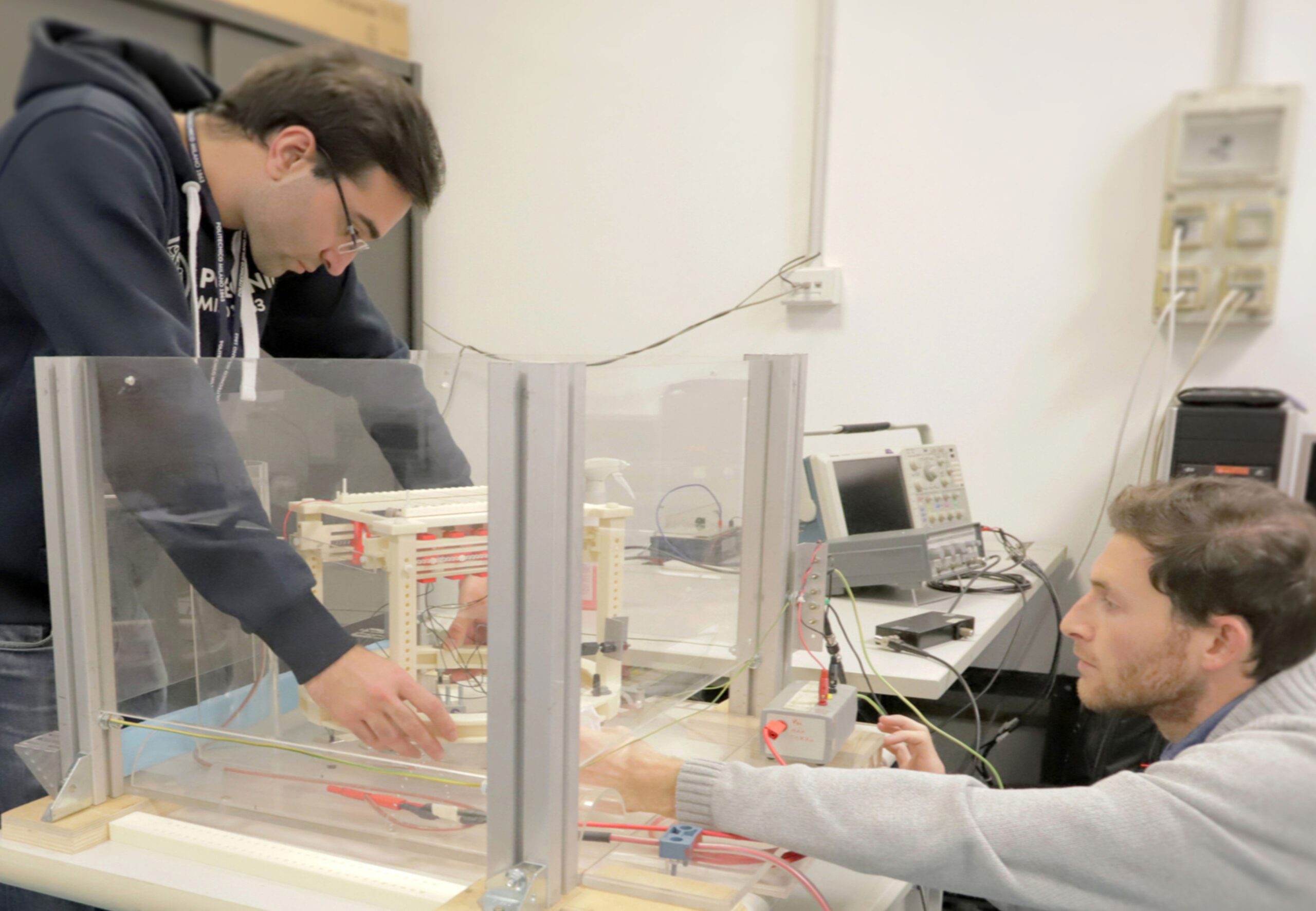
However, finding the right partners for this ambitious project wasn’t easy. “It’s not easy to recruit people who are willing to dive into uncharted territory,” Marco explains. “But once we got started, we gained momentum and built a network of passionate researchers.” Besides Politecnico di Milano, the consortium includes now Università di Bologna, Karlsruher Institut Für Technologie, von Karman Institute for Fluid Dynamics, Centre National de la Recherche Scientifique, Institut Superieur de l’Aeronautique et de l’Espace, Technische Universität Dresden, Aeronord sas with their group leaders Andrea Cristofolini, Jochen Kriegseis, Delphine Laboureur, Franck Plouraboué, Nicolas Binder, Harald Pfifer, Claudia Cisaro, with a wide staff of young researchers and a management unit.
“Some colleagues didn’t believe in the project or were critical of its lack of immediate applications.”
The journey was not without challenges. “We faced resistance, especially from those within academia who preferred to stick to the status quo,” he admits. “Some colleagues didn’t believe in the project or were critical of its lack of immediate applications. It wasn’t easy to convince them to take the leap, but once we proved the feasibility, their skepticism turned into support.”
Marco’s involvement in the project has also had an impact on his personal life. “It’s a trade-off,” he says. “But the excitement of working on something so innovative keeps me motivated. I think coordinating a project like this doesn’t just mean managing it. Creativity cannot be delegated”. And despite the sacrifices, Marco remains passionate about the project, being an innovator means firstly having fun. “I’m convinced that this technology can make a real difference. If we succeed, it could have a lasting impact on industries ranging from transportation to space exploration.”
